At a Glance
- Targeted therapies block specific molecular targets (EGFR, ALK, ROS1, HER2, etc.) that drive cancer cell growth and proliferation; with osimertinib in EGFR-mutant lung cancer, median progression-free survival can reach 18.9 months.
- Treatment is administered as an oral tablet or intravenous infusion; most targeted drugs are taken once daily by mouth and given on an outpatient basis.
- The most common side effects are acneiform rash, diarrhoea, fatigue, and elevated liver enzymes; serious side effects include interstitial lung disease (ILD) and QT prolongation.
- In Turkey, these drugs are on the reimbursement list under SGK coverage for approved indications including lung cancer, breast cancer, kidney cancer, and others; a total of 784 cancer drugs are covered by SGK.
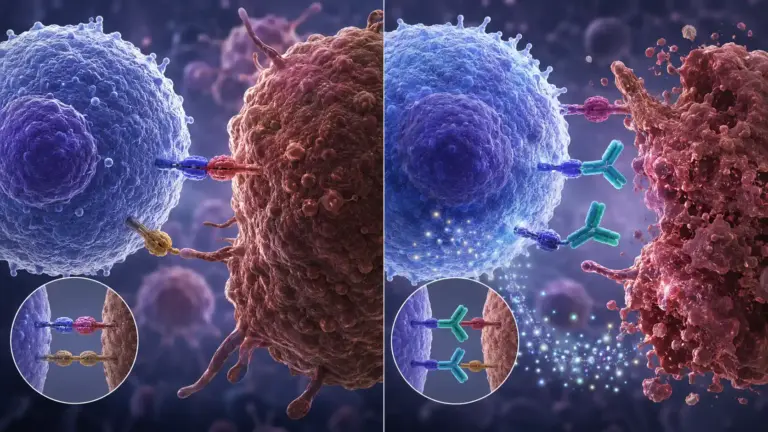
Targeted therapies are a personalised treatment approach that focuses on specific molecular targets responsible for the growth and proliferation of cancer cells. Unlike conventional chemotherapy, they block activated signalling pathways only in cancer cells without harming healthy cells. According to NIH data, this approach has created a fundamental transformation in cancer treatment over the past 20 years.
What Are Targeted Therapies?
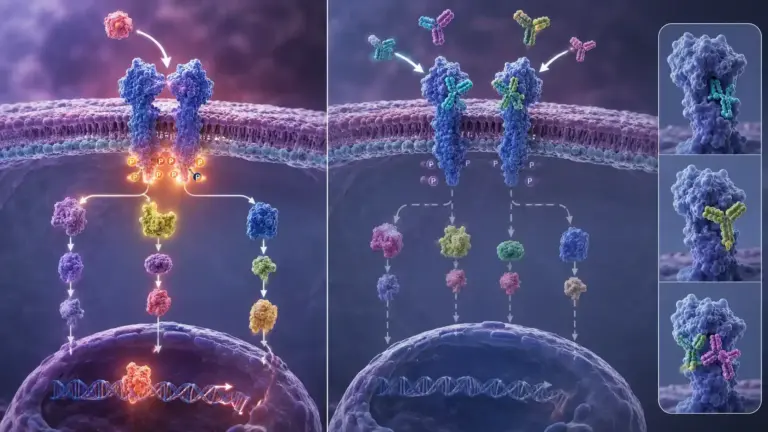
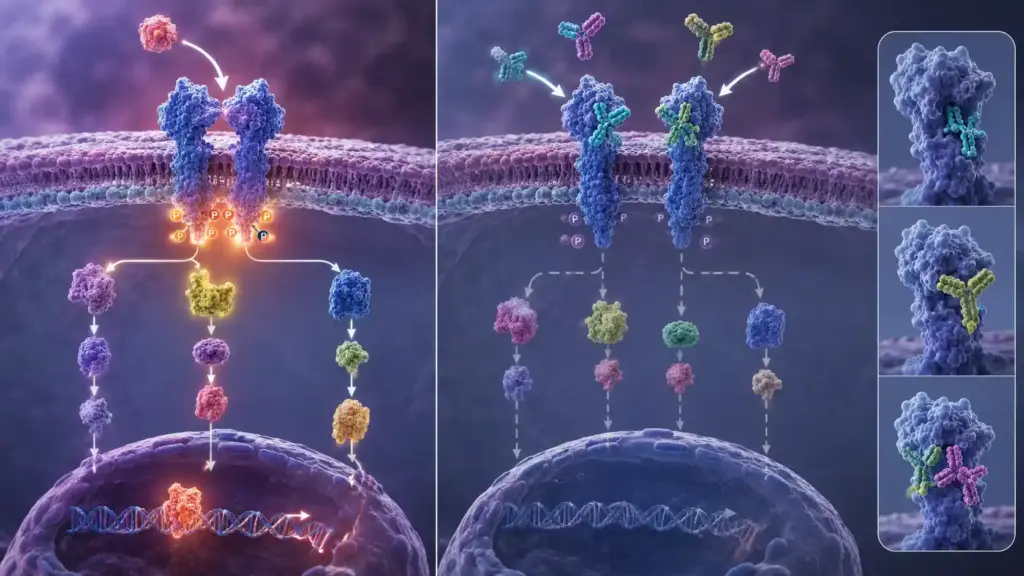
Targeted therapies are drugs that work based on specific genetic and molecular changes in tumour cells. There are two main types: small-molecule tyrosine kinase inhibitors (TKIs) and monoclonal antibodies. TKIs are taken as oral tablets and block intracellular signalling pathways; monoclonal antibodies are administered by intravenous infusion and bind to receptors on the cell surface.
These treatments target specific targets such as EGFR, ALK, ROS1, RET, MET, BRAF, HER2, and KRAS G12C that control the growth of cancer cells. According to NIH/PMC data, this approach offers a better side-effect profile compared with conventional chemotherapy and better preserves patients’ quality of life.
What Are the Available Targeted Therapies?
Targeted therapy drugs are classified according to the molecular structure they target:
| Target | Drug Examples | Indication | Generation |
|---|---|---|---|
| EGFR | Osimertinib, Gefitinib, Erlotinib, Afatinib | NSCLC (exon 19 del, L858R) | 1st3rd generation TKI |
| ALK | Alectinib, Brigatinib, Lorlatinib, Crizotinib | ALK+ NSCLC | 1st3rd generation TKI |
| ROS1 | Entrectinib, Crizotinib, Lorlatinib, Repotrectinib | ROS1+ NSCLC | Multiple generations |
| RET | Selpercatinib, Pralsetinib | RET+ NSCLC, thyroid cancer | 1st generation |
| MET | Tepotinib, Capmatinib | MET exon 14 skipping NSCLC | 1st generation |
| KRAS G12C | Sotorasib, Adagrasib | KRAS G12C+ NSCLC | 1st generation |
| HER2 | Trastuzumab, Pertuzumab, T-DXd | HER2+ breast cancer, gastric cancer | Antibody, ADC |
| BRAF V600E | Dabrafenib + Trametinib | Melanoma, NSCLC, thyroid cancer | Combination |
According to Assoc. Prof. Dr Nilay Şengül, comprehensive molecular profiling must be performed before selecting a targeted therapy; this profiling identifies specific mutations and amplifications in the patient’s tumour to enable selection of the most appropriate drug. NGS (next-generation sequencing) tests are routinely applied at Memorial Şişli Hospital.
Who Are Targeted Therapies Applied To?
Targeted therapies are effective in patients with specific molecular biomarkers. According to Assoc. Prof. Dr Nilay Şengül, comprehensive molecular testing as a first step in every patient with metastatic lung cancer is required; a decision on targeted therapy cannot be made without this test.
- Approved indications: EGFR-mutant non-small cell lung cancer (NSCLC), ALK+ NSCLC, ROS1+ NSCLC, RET+ NSCLC, MET exon 14 skipping NSCLC, KRAS G12C+ NSCLC, HER2+ breast cancer, BRAF V600E+ melanoma, ovarian cancer (PARP inhibitors), renal cell carcinoma (VEGF inhibitors)
- Stage and status: Predominantly in metastatic (Stage 4) disease; in recent years adjuvant and neoadjuvant use in early-stage disease has also been approved (e.g. alectinib as adjuvant therapy in ALK+ NSCLC)
- Required biomarker tests: EGFR mutation analysis (exon 19 deletion, L858R, T790M, exon 20 insertion), ALK fusion test (FISH or IHC), ROS1 fusion test, RET fusion test, MET exon 14 skipping, KRAS G12C mutation, HER2 status (IHC/FISH), BRAF V600E mutation, NTRK fusion
- Contraindications: Situations where the target biomarker is negative, active severe liver disease, pregnancy (risk of teratogenic effects), history of hypersensitivity to the drug
How Are Targeted Therapies Administered?
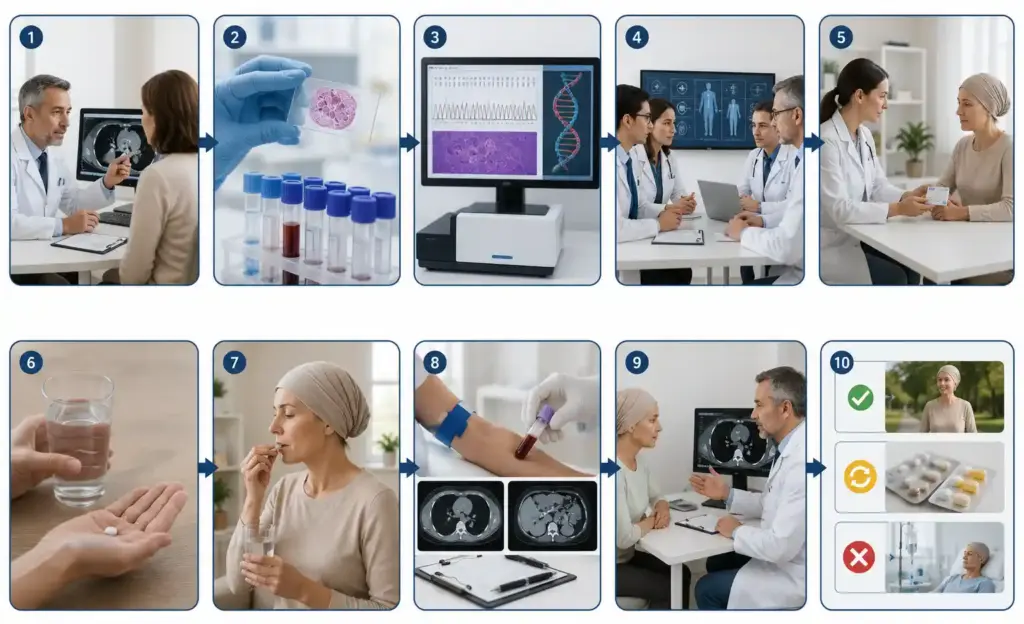
The method of administration of targeted therapies varies according to the type of drug:
- Route of administration: TKIs are taken as oral tablets daily; monoclonal antibodies are administered by intravenous (IV) infusion
- Dose and frequency: Osimertinib 80 mg once daily; alectinib 600 mg twice daily; lorlatinib 100 mg once daily; selpercatinib 160 mg twice daily
- Infusion duration (monoclonal antibodies): Trastuzumab 3090 minutes; bevacizumab 3090 minutes; amivantamab 24 hours (first infusion longer)
- Treatment duration: Generally continued until disease progression or unacceptable toxicity; can sometimes be planned for up to 2 years
- Hospitalisation requirement: Hospitalisation is not required for oral TKIs; IV monoclonal antibodies are given as day-case (outpatient) treatment
- Pre-treatment preparation: Liver and kidney function tests, ECG (for QT interval), eye examination (for ALK inhibitors), skin assessment (for EGFR inhibitors)
Drug interactions are critically important when taking oral TKIs; drugs that reduce gastric acid, such as proton pump inhibitors (PPIs), may adversely affect the absorption of some TKIs. It is therefore essential to inform the doctor of the list of medications being taken.
Side Effects of Targeted Therapies
Side effects of targeted therapies arise because the molecular pathways targeted are also present in healthy tissues. The side-effect profile varies according to the molecular target and generation of the drug.
| Target / Drug Class | Common Side Effects | Serious Side Effects |
|---|---|---|
| EGFR TKIs | Acneiform rash, paronychia, diarrhoea, stomatitis, fatigue | Interstitial lung disease (ILD), QT prolongation, hepatotoxicity |
| ALK TKIs | Visual disturbances, myalgia, peripheral oedema, hepatotoxicity | Bradycardia, pneumonitis, hyperglycaemia, hyperlipidaemia |
| ROS1 TKIs | Dizziness, diarrhoea, visual problems, fatigue, constipation | Liver damage, peripheral neuropathy, pulmonary oedema |
| RET TKIs | Hepatotoxicity, nausea, mucositis, hypertension, proteinuria | QT prolongation, ILD, hypertensive crisis |
| MET TKIs | Peripheral oedema, nausea, diarrhoea, hepatotoxicity | Acute liver failure, pulmonary toxicity |
| KRAS G12C | Gastrointestinal (nausea, diarrhoea), hepatotoxicity | ILD, liver failure |
| HER2 inhibitors | Cardiac dysfunction, infusion reaction, myelosuppression | Congestive heart failure, anaphylaxis |
Symptoms requiring immediate reporting: Shortness of breath or cough (sign of ILD), chest pain or palpitations (cardiac arrhythmia), severe diarrhoea or abdominal pain, jaundice or dark urine (liver toxicity), severe skin rash or blistering, sudden visual changes, severe dizziness or feeling of faintness.
Targeted Therapy vs Chemotherapy Comparison
| Criterion | Targeted Therapy | Chemotherapy |
|---|---|---|
| Mechanism | Blocks specific molecular targets | Affects all dividing cells (cancer and healthy) |
| Administration | Oral tablet or IV infusion | IV infusion |
| Common side effects | Rash, diarrhoea, fatigue, elevated liver enzymes | Hair loss, nausea, vomiting, neutropenia, infection risk |
| Hair loss | Rare | Common |
| Response time | Rapid (within 24 weeks) | Moderate (within 48 weeks) |
| Development of resistance | Average 13 years (mutation-dependent) | Less common |
| Quality of life | Generally better preserved | More affected |
Clinical Assessment by Assoc. Prof. Dr Nilay Şengül
I frequently observe the following in clinical practice: In patients who respond to targeted therapy, the response is much faster and more sustainable than with chemotherapy, and patients are able to continue with their daily activities. Particularly in my patients with EGFR-mutant lung cancer, symptomatic relief can be achieved within 24 weeks of starting osimertinib.
According to Assoc. Prof. Dr Nilay Şengül, the most critical point of targeted therapies is performing the correct biomarker test before treatment. Selecting the wrong targeted therapy is not only ineffective but can also cause unnecessary toxicity and treatment delay in the patient. At Memorial Şişli Hospital, we routinely apply an NGS panel in every patient with metastatic lung cancer; this allows us to screen for all actionable targets including EGFR, ALK, ROS1, RET, MET, KRAS, BRAF, HER2, and NTRK.
Post-Treatment Process and Follow-up
Regular follow-up from the start of treatment is critically important:
- Check-up frequency: Every 68 weeks during the first 3 months; every 23 months after a stable response
- Response assessment: Contrast-enhanced thorax-abdomen-pelvis CT or PET-CT every 612 weeks; MRI if there is a risk of brain metastasis
- Laboratory follow-up: Liver function tests (AST, ALT, ALP, bilirubin) every 46 weeks; kidney function and full blood count regularly
- Specific monitoring: ECG (for QT interval, especially with osimertinib and selpercatinib), thyroid function tests (ALK inhibitors), eye examination (ALK inhibitors)
- Development of resistance: On average within 13 years; when resistance develops, the resistance mechanism is investigated by re-biopsy or liquid biopsy (ctDNA)
- Post-resistance strategies: Osimertinib for T790M resistance (after 1st2nd generation); 4th generation TKI clinical trials for C797S resistance; osimertinib + MET inhibitor combination for MET amplification; relevant targeted therapy for bypass pathway activation
Frequently Asked Questions
Which Targeted Therapies Are Used in Breast Cancer?
In HER2-positive breast cancer, trastuzumab, pertuzumab, trastuzumab emtansine (T-DM1), and trastuzumab deruxtecan (T-DXd) are used. In hormone receptor-positive, HER2-negative advanced breast cancer, CDK4/6 inhibitors (palbociclib, ribociclib, abemaciclib) are combined with endocrine therapy. Alpelisib is added in PIK3CA-mutant patients, and capivasertib in AKT1-mutant or PTEN-loss patients.
What Is the Difference Between Targeted Therapy and Chemotherapy?
While chemotherapy damages all dividing cells (cancer and healthy), targeted therapy focuses only on specific molecular targets in cancer cells. For this reason, side effects such as hair loss, nausea, and low blood count values are less common with targeted therapy; however, target-specific side effects such as skin rash, diarrhoea, and elevated liver enzymes may occur.
What Happens If Resistance Develops to Targeted Therapy?
The development of resistance is a known limitation of targeted therapy. When resistance develops, the resistance mechanism is determined by re-biopsy or liquid biopsy (ctDNA). For example, if a C797S mutation develops after osimertinib, 4th generation TKI clinical trials can be considered; if MET amplification is present, the osimertinib + MET inhibitor combination can be tried. There is a different next-line treatment strategy for each resistance mechanism.
Conclusion
Targeted therapies are a modern treatment paradigm that forms the basis of molecular profiling and personalised approaches in cancer treatment. With the correct biomarker test and patient selection, long-lasting and sustainable responses can be achieved. Continuous molecular monitoring is critically important for resistance management and subsequent lines of treatment.
You can consult Assoc. Prof. Dr Nilay Şengül to evaluate your personal situation regarding targeted therapies and to learn about your molecular profiling options. To book an appointment at Memorial Şişli Hospital, you can call 444 7 888.
References
- Soria JC et al., NEJM, 2018 Osimertinib in Untreated EGFR-Mutated Advanced NSCLC (FLAURA) https://doi.org/10.1056/NEJMoa1713137
- NIH/PMC, “Molecular targeted therapy for anticancer treatment” https://pmc.ncbi.nlm.nih.gov/articles/PMC9636149/
- American Cancer Society, “Targeted Drug Therapy for Non-small Cell Lung Cancer” https://www.cancer.org/…