
📌 What You Need to Know in a Nutshell
- Pancreatic cancer ranks third among cancer-related deaths worldwide, with 66,440 new cases and 51,750 deaths projected for 2024.
- While the 5-year survival rate is 39% in the early stage (IA), it drops to 3% in the metastatic stage (IV).
- The combination of smoking, diabetes, and poor nutrition increases the risk of pancreatic cancer more than any single factor alone.
- A Whipple procedure takes 4–12 hours; and the average hospital stay is 7–14 days.
Pancreatic cancer is an aggressive malignancy that originates in the secretory cells of the pancreas. Ductal adenocarcinoma accounts for 85to 90 percent of pancreatic tumors. The pancreas is an organ located behind the stomach that produces digestive enzymes and secretes hormones that regulate blood sugar. This cancer, which does not present symptoms in its early stages, is diagnosed as locally advanced or metastatic disease in more than 80% of cases at the time of diagnosis. For this reason, understanding the stages of pancreatic cancer and its early symptoms is of critical importance.
What Is Pancreatic Cancer?
Pancreatic cancer is a malignant tumor resulting from the uncontrolled proliferation of cells in pancreatic tissue. Tumors located in the head of the pancreas can cause jaundice by compressing the duodenum and bile duct. Tumors in the body and tail regions, however, present symptoms later. Ductal adenocarcinoma accounts for the vast majority of pancreatic cancer cases. Neuroendocrine tumors are rarer (1–2%) but generally have a better prognosis.
According to SEER Program data, 66,440 new cases of pancreatic cancer and 51,750 deaths are expected in the U.S. in 2024; this accounts for 8.5% of all cancer deaths. Although pancreatic cancer accounts for only 3.3% of cancer incidence, mortality rates are high; this points to the aggressive nature of the disease and the difficulty of early diagnosis.
What Are the Symptoms of Pancreatic Cancer?
The symptoms of pancreatic cancer vary depending on the tumor’s location and stage. Tumors in the head of the pancreas cause symptoms of bile duct obstruction, such as jaundice, pale stools, and dark urine, while tumors in the body and tail of the pancreas present with later-onset and more nonspecific symptoms.
Stage 1 Pancreatic Cancer Symptoms
Symptoms of stage 1 pancreatic cancer are generally nonspecific or may be absent. When the tumor remains within the boundaries of the pancreas (≤2 cm), most patients are asymptomatic. Rarely, mild upper abdominal pain, loss of appetite, or weight loss may occur. At this stage, the diagnosis is usually made incidentally during imaging performed for another reason.
Stage 2 Pancreatic Cancer Symptoms
Symptoms of stage 2 pancreatic cancer become more pronounced as the tumor spreads beyond the pancreas. Upper abdominal pain radiates to the back or lower back. Loss of appetite, weight loss, and fatigue also occur. In tumors of the pancreatic head, jaundice (yellowing of the skin and whites of the eyes) may occur. The pain worsens after eating or when lying on one’s back and eases when leaning forward.
Stage 3 Pancreatic Cancer Symptoms
Symptoms of stage 3 pancreatic cancer worsen when the tumor involves major blood vessels (the celiac artery, superior mesenteric artery). Jaundice becomes more pronounced and is accompanied by itching. Nausea, vomiting, and a feeling of early satiety occur due to obstruction at the stomach outlet. Diabetes management may become more difficult. Regional lymph node involvement may cause a palpable mass to be felt in the neck or abdomen.
Stage 4 Pancreatic Cancer Symptoms
Symptoms of stage 4 pancreatic cancer are characterized by distant organ metastases. In liver metastases, symptoms include an enlarged liver, abdominal swelling (ascites) and signs of liver failure. Lung metastases cause coughing and shortness of breath; bone metastases result in bone pain. Symptoms of terminal stage 4 pancreatic cancer include severe pain, excessive weight loss (cachexia), severe weakness, and changes in consciousness.
What Causes Pancreatic Cancer?
The answer to the question “What causes pancreatic cancer?” lies in genetic and epigenetic changes at the cellular level. DNA mutations in pancreatic duct cells (KRAS, TP53, CDKN2A, SMAD4) in pancreatic duct cells lead to uncontrolled proliferation. These mutations are triggered by environmental factors such as carcinogens in cigarette smoke, chronic inflammation, and metabolic stress.
The link between diabetes and pancreatic cancer plays a significant role among the causes of pancreatic cancer. Newly diagnosed diabetes may be an early sign of pancreatic cancer; this is known as the “3-year rule.” Between 25% and 50% of patients diagnosed with pancreatic cancer have diabetes or glucose intolerance.
According to Assoc. Prof. Dr. Nilay Şengül,, screening for pancreatic cancer should be considered in patients over 50 years of age with newly diagnosed diabetes; advanced imaging tests (CT, EUS) are indicated, especially if accompanied by weight loss, pain, or jaundice.
How Is Pancreatic Cancer Diagnosed?
The answer to the question “How is pancreatic cancer diagnosed?” lies in clinical suspicion and advanced imaging studies. Suspicions arise from symptoms such as upper abdominal pain, weight loss, jaundice, and newly diagnosed diabetes. A definitive diagnosis is made through biopsy guided by CT, MRI, or endoscopic ultrasound (EUS). The CA 19-9 tumor marker is supportive but does not establish a diagnosis on its own.
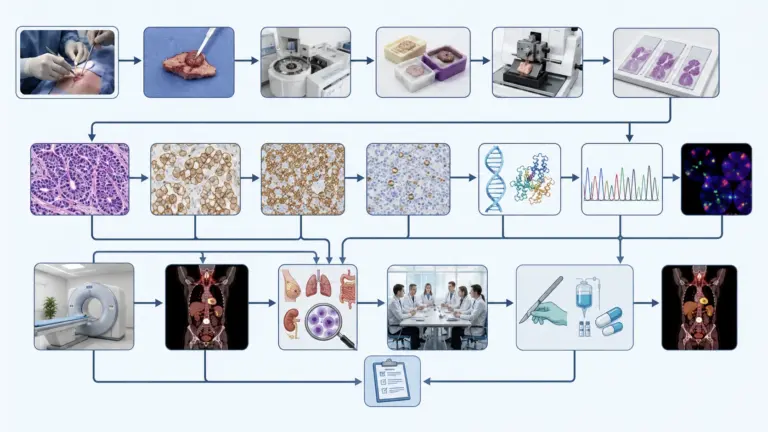
In response to the question “How is pancreatic cancer diagnosed?”, the diagnostic process proceeds in three stages: (1) Raising suspicion through clinical examination and medical history, (2) Determining the tumor’s location and stage via imaging (CT, MRI, EUS), (3) Histopathological diagnosis via fine-needle aspiration biopsy (FNAB) or percutaneous biopsy guided by EUS. In response to the question “Which test detects pancreatic cancer?”, while CA 19-9, liver function tests, and a complete blood count are supportive, but a definitive diagnosis is made by biopsy.
The answer to the question “Can pancreatic cancer be detected on an ultrasound?” is that transabdominal ultrasonography has limited sensitivity. Endoscopic ultrasound (EUS) is the most sensitive imaging method for pancreatic cancer. Regarding blood test values for pancreatic cancer, a CA 19-9 level >37 U/mL raises suspicion but has limited specificity.
Pancreatic Cancer Treatment
Pancreatic cancer treatment is personalized based on the stage, tumor location, and the patient’s overall condition:
- Surgical Resection: This is the only potentially curative treatment. The Whipple procedure (pancreaticoduodenectomy) is performed for tumors of the pancreatic head. Distal pancreatectomy is performed for tumors of the body or tail; total pancreatectomy is considered for extensive disease.
- Chemotherapy: It is administered as adjuvant (post-surgical) or neoadjuvant (pre-surgical) therapy. FOLFIRINOX and gemcitabine + nab-paclitaxel are common regimens.
- Radiation therapy: Stereotactic body radiation therapy (SBRT) or conventional radiation therapy is used in locally advanced disease or for pain control.
- Immunotherapy: Pembrolizumab, is FDA-approved for MSI-H/dMMR-positive patients. The response rate to immunotherapy in PDAC is low; however, it is effective in the subgroup with microsatellite instability.
- Targeted Therapies: Olaparib is used for maintenance therapy in metastatic patients with BRCA1/2 mutations.
- Palliative Care: Pain control, nutritional support, and symptom management in advanced-stage patients.
| Stage | TNM | 5-Year Survival | Treatment Approach |
|---|---|---|---|
| IA | T1, N0, M0 | 39% | Surgery + adjuvant chemotherapy |
| IB | T2, N0, M0 | 27% | Surgery + adjuvant chemotherapy |
| IIA | T3, N0, M0 | 14% | Surgery + adjuvant chemotherapy |
| IIB | T1–3, N1, M0 | 11% | Surgery + adjuvant chemotherapy |
| III | T4, any N, M0 | 3% | Chemoradiotherapy or systemic therapy |
| IV | Any T, any N, M1 | 3% | Systemic therapy + palliative care |
Assoc. Prof. Dr. Şengül emphasizes that the neoadjuvant chemotherapy approach is becoming increasingly common in the treatment of pancreatic cancer in clinical practice; this strategy can increase resection rates by reducing tumor size and controlling micrometastases prior to surgery.
Pancreatic Cancer Surgery
Pancreatic cancer surgery forms the basis of potentially curative treatment. However, at the time of diagnosis, surgical resection is possible in only 15–20% of patients:
- Whipple Procedure (Pancreaticoduodenectomy): The head of the pancreas, the duodenum, the gallbladder, and the cystic duct are removed; the remaining pancreas, stomach, and small intestine are anastomosed. According to Mayo Clinic data, the surgery takes 4–12 hours.
- Distal Pancreatectomy: The body/tail of the pancreas and the spleen are removed.
- Total Pancreatectomy: The entire pancreas is removed; lifelong enzyme and insulin replacement therapy is required.
- Vascular Resection: Performed by experienced surgeons at high-volume centers when the tumor involves major blood vessels.
Postoperative complications include pancreatic fistula (10–30%), delayed gastric emptying (15–40%), bleeding, and infection. The average hospital stay is 7–14 days. Adjuvant chemotherapy is initiated 4–8 weeks after surgery.
According to Assoc. Prof. Dr. Nilay Şengül, the risk of pancreatic fistula following pancreatic cancer surgery can be significantly reduced when surgery is performed at high-volume centers by experienced teams; therefore, surgical volume is an important criterion in the patient’s choice of center.
Signs of Recovery in Pancreatic Cancer
Signs of recovery in pancreatic cancer vary depending on the response to treatment and the patient’s overall condition. Weight gain after surgery, reduced pain, and a decrease in tumor markers (CA 19-9) are positive signs. In response to chemotherapy, tumor shrinkage, resolution of jaundice, and increased appetite may be observed. Patients with pancreatic cancer should support their recovery process through regular follow-up after treatment.
Clinical Assessment by Assoc. Prof. Dr. Nilay Şengül
In my clinical practice, I frequently observe the following: A significant proportion of patients diagnosed with pancreatic cancer have interpreted their symptoms as digestive problems or stress for months. Diagnosis is often delayed, particularly for tumors in the body and tail regions, because they do not cause bile duct obstruction. According to Assoc. Prof. Dr. Nilay Şengül, pancreatic cancer should be ruled out in every patient over the age of 50 with a new diagnosis of diabetes, weight loss, and upper abdominal pain; in the presence of this triad, evaluation with contrast-enhanced CT or endoscopic ultrasound (EUS) is indicated. This approach directly increases the potential for surgery by raising early-stage diagnosis rates.
From Diagnosis to Recovery: How Does the Process Proceed?
The pancreatic cancer diagnosis and treatment process proceeds in stages based on the patient’s clinical condition:
- Initial Examination and Evaluation: A detailed medical history is taken from patients presenting with suspected pancreatic cancer. The nature and spread of pain, the amount and duration of weight loss, the presence of jaundice, and changes in stool and urine color are assessed. A family history of pancreatic cancer, BRCA mutations, or chronic pancreatis assessed. During the physical examination, the patient is examined for jaundice, an abdominal mass, and cervical lymph nodes.
- Tests and Imaging: Liver function tests, the CA 19-9 tumor marker, complete blood count, and coagulation parameters are measured. A three-phase contrast-enhanced CT scan is the first-line test for assessing tumor size, vascular involvement, and distant metastases. Endoscopic ultrasound (EUS) is the gold standard, particularly for small tumors and when a biopsy is needed. PET-CT is used for screening for distant metastases.
- Treatment Planning: Findings are reviewed by a multidisciplinary oncology board (medical oncologist, surgical oncologist, gastroenterologist, radiologist, pathologist). For resectable tumors, surgery plus adjuvant chemotherapy is planned; for borderline resectable tumors, surgery following neoadjuvant chemotherapy is planned; and for metastatic disease, systemic therapy is planned. Survival in pancreatic cancer varies.
- Surgical Procedure and Hospital Stay: Pancreatic cancer surgery is performed under general anesthesia. The Whipple procedure takes 4to 12 hours. The average hospital stay is 7–14 days. Patients are closely monitored for postoperative pancreatic fistula, delayed gastric emptying, and infection. Adjuvant chemotherapy is initiated 4–8 weeks after surgery.
- Recovery After Discharge: Full recovery may take 6–12 weeks. Patients receive education on pancreatic enzyme replacement and diabetes management (insulin requirements following surgery) are provided. A return to light activities is possible within 4–6 weeks. As part of the follow-up plan, CA 19-9 testing and imaging are recommended every 3 months for the first 2 years, and every 6 months thereafter. CA 19-9 levels and imaging tests are recommended. Signs of recovery from pancreatic cancer include weight gain, reduced pain, and a decrease in tumor markers.
According to Assoc. Prof. Dr. Nilay Şengül, during the follow-up period after pancreatic cancer treatment, regular monitoring of CA 19-9 levels is a valuable indicator for the early detection of recurrence; however, CA 19-9 is reliable only in Lewis antigen-positive patients and should not be used in isolation.
Frequently Asked Questions
How is pancreatic cancer diagnosed?
Pancreatic cancer is suspected based on symptoms such as upper abdominal pain, weight loss, jaundice, and newly diagnosed diabetes. A definitive diagnosis is made through biopsy guided by CT, MRI, or endoscopic ultrasound (EUS). The CA 19-9 tumor marker is supportive but does not establish a diagnosis on its own. Most patients are asymptomatic in the early stages; therefore, screening is important for high-risk individuals.
Where Does Pancreatic Cancer Occur?
Pancreatic cancer develops in the pancreas, an organ located behind the abdomen, between the stomach and the spine. Tumors in the head of the pancreas (60–70%) cause jaundice by compressing the duodenum and bile duct. Tumors in the body (10–15%) and tail (5–10%) regions present symptoms later. Rarely, a diffuse disease affecting the entire pancreas may occur.
Is pancreatic cancer genetic?
5–10% of pancreatic cancers are associated with a genetic predisposition. BRCA1/2, PALB2, ATM, Lynch syndrome (MLH1, MSH2, MSH6, PMS2), and Peutz-Jeghers syndrome (STK11) increase the risk. Genetic counseling is recommended if two or more first-degree relatives in the family have had pancreatic cancer. Genetic testing helps determine early screening strategies for high-risk individuals.
What happens if pancreatic cancer spreads to the liver?
Metastasis of pancreatic cancer to the liver (Stage IV) is the most common form of distant spread. In cases of liver metastasis, surgical resection is generally not possible; treatment is limited to systemic chemotherapy (FOLFIRINOX or gemcitabine + nab-paclitaxel). Liver enzymes (AST, ALT, ALP, GGT) rise, and abdominal swelling (ascites) and jaundice may develop. Palliative care, pain management, and nutritional support are priorities.
Where does pancreatic cancer pain occur?
Pain from pancreatic cancer typically begins in the upper abdomen (epigastrium) and radiates to the back. The pain worsens after eating or when lying on one’s back, and eases when leaning forward. In tumors of the pancreatic head, pain may be localized in the right upper quadrant; in tumors of the body and tail, it may be localized in the middle and left upper quadrants. In advanced stages, the pain become severe and chronic due to invasion of the celiac plexus.
What Helps with Pancreatic Cancer?
The answer to the question “What helps with pancreatic cancer?” varies depending on the stage of treatment. In the early stages, surgical resection plus adjuvant chemotherapy is the most effective approach. In advanced stages, systemic chemotherapy (FOLFIRINOX, gemcitabine + nab-paclitaxel) and palliative care are administered. From a nutritional perspective, a high-calorie, high-protein diet and pancreatic enzyme replacement are supportive. Pain control is achieved with opioid analgesics and neuroablation. ToTo answer the question “What can be done to prevent pancreatic cancer?”, the recommendations include avoiding smoking, maintaining a healthy weight, managing diabetes, and avoiding excessive alcohol consumption.
Is there a treatment for pancreatic cancer?
Yes, there is a treatment for pancreatic cancer, but treatment options depend on the stage of the disease. In early stages (Stages I–II), surgical resection plus adjuvant chemotherapy is a potentially curative approach. In locally advanced stages (Stage III), surgery is considered following neoadjuvant chemotherapy or chemoradiotherapy. In the metastatic stage (Stage IV), systemic chemotherapy, immunotherapy (in MSI-H/dMMR patients), and palliative care are administered. New treatment approaches and clinical trials are ongoing.
How long does pancreatic cancer surgery take?
The duration of pancreatic cancer surgery varies depending on the type of procedure and the complexity of the tumor. According to Mayo Clinic data, the Whipple procedure (pancreaticoduodenectomy) takes 4–12 hours. Distal pancreatectomy generally takes less time (2–4 hours) . In complex cases requiring vascular resection, the surgery may take longer. The duration of the surgery is also related to the surgeon’s experience and the volume of cases at the center.
Does Pancreatic Cancer Cause Diarrhea?
Yes, pancreatic cancer can cause diarrhea. The pancreas is the organ that produces digestive enzymes (lipase, amylase, protease). When a tumor blocks the pancreatic duct or when pancreatic tissue is reduced after surgery, enzyme deficiency (exocrine pancreatic insufficiency) develops. Fatty, foul-smelling, and watery stools (steatorrhea) are a typical symptom. This symptom can be managed with pancreatic enzyme replacement therapy.
Where does itching occur in pancreatic cancer?
Itching in pancreatic cancer occurs due to bile duct obstruction. When the tumor is located in the head of the pancreas, it compresses the common bile duct, blocking bile flow. The accumulation of bile salts in the skin causes itching. Itching can generally occur anywhere on the body but is more pronounced on the hands and feet. Jaundice is a common accompanying symptom. Endoscopic bile drainage (ERBD) or percutaneous drainage helps relieve the itching.
How long do patients with Stage 4 pancreatic cancer live?
Life expectancy for stage 4 pancreatic cancer varies depending on treatment response and overall health. The median survival time for metastatic pancreatic cancer (Stage IV) is 5.6 months with gemcitabine, 11.1 months with FOLFIRINOX. The 5-year survival rate is 3%. However, these durations may be extended in selected patients and with new treatment regimens. Palliative care plays a critical role in maintaining quality of life.
How long do people with pancreatic cancer live?
The answer to the question “How many years do people with pancreatic cancer live?” varies depending on the stage. In Stage IA, the 5-year survival rate is %39%, in Stage IB it is 27%, in Stage IIA it is 14%, in Stage IIB it is 11%, and in Stages III and IV it is 3%. Median survival ranges from 12 to 20 months in Stages I–II and 6 to 12 months in Stages III–IV. However, these statistics represent population averages; individual outcomes may vary depending on treatment response, overall health, and comorbidities.
Is Pancreatic Cancer Fatal?
Long-term survival is possible if pancreatic cancer is diagnosed at an early stage and appropriate treatment is administered. However, at the time of diagnosis, most patients are in an advanced stage, and the prognosis is serious. The 5-year overall survival rate is around 12%; this is one of the lowest rates among all cancers. In the early stage (Stage I), 5-year survival can reach 39% with surgery plus adjuvant therapy. Regular follow-up after treatment and a healthy lifestyle support quality of life and survival.
How is pancreatic cancer diagnosed?
Pancreatic cancer is diagnosed based on clinical suspicion, imaging, and biopsy. A three-phase contrast-enhanced CT scan is the first step in assessing the tumor’s size and stage. Endoscopic ultrasound (EUS) is the gold standard for tumors and when a biopsy is needed. A histopathological diagnosis is confirmed by fine-needle aspiration biopsy (FNAB) guided by EUS. The CA 19-9 tumor marker is supportive but not diagnostic.
Which tests are used to diagnose pancreatic cancer?
A definitive diagnosis of pancreatic cancer is made via biopsy. However, the following tests are used during the diagnostic process: the CA 19-9 tumor marker (supportive, but not diagnostic on its own), liver function tests (elevated bilirubin, ALP, and GGT), complete blood count and coagulation parameters. Imaging (CT, MRI, EUS, PET-CT) aids in staging. Fine-needle aspiration biopsy (FNAB) guided by endoscopic ultrasound (EUS) is the gold standard diagnostic method.
Can pancreatic cancer be detected on an ultrasound?
Transabdominal ultrasound can be used for the initial evaluation of pancreatic cancer, but its sensitivity is limited. Because the pancreas is located behind the abdomen, gas and obesity can make imaging difficult. Endoscopic ultrasound (EUS) is the most sensitive imaging method for pancreatic cancer; it is particularly superior in evaluating small tumors (<2 cm) and vascular involvement. CT and MRI are used as complementary imaging modalities to EUS.
Pancreatic cancer, is one of the deadliest cancers due to the difficulty of early diagnosis and its aggressive course. Ductal adenocarcinoma accounts for the vast majority of cases, and at the time of diagnosis, most patients are in an advanced stage. Surgical resection in the early stages is the only potentially curative option; however, it is feasible in only 15%–20 of patients. Neoadjuvant chemotherapy is an important strategy that improves the chances of surgery. Awareness of risk factors (smoking, diabetes, obesity, family history) and screening in high-risk individuals are vital for early diagnosis.
To discuss your personal situation regarding pancreatic cancer and have your questions answered, you can consult with Assoc. Prof. Dr. Nilay Şengül. To schedule an appointment at the Memorial Şişli Hospital clinic, please call 444 7 888.
Sources
- PMC/NIH, “Global Trend in Pancreatic Cancer Prevalence Rates” — https://pmc.ncbi.nlm.nih.gov/articles/PMC11497012/
- PMC/NIH, “Pancreatic Cancer: Current Options for Diagnosis, Staging, and Therapeutic Management” — https://pmc.ncbi.nlm.nih.gov/articles/PMC4645567/
- Mayo Clinic, “Pancreatic cancer – Symptoms and causes” — https://www.mayoclinic.org/diseases-conditions/pancreatic-cancer/symptoms-causes/syc-20355421
- Mayo Clinic, “Whipple procedure” — https://www.mayoclinic.org/tests-procedures/whipple-procedure/about/pac-20385054
- NHS UK, “Symptoms of pancreatic cancer” — https://www.nhs.uk/conditions/pancreatic-cancer/symptoms/
- SEER/NCI, Cancer Statistics Facts: Pancreatic Cancer — https://seer.cancer.gov/statfacts/html/pancreas.html
- American Cancer Society, Cancer Facts & Figures 2024 — https://www.cancer.org/content/dam/cancer-org/research/cancer-facts-and-statistics/annual-cancer-facts-and-figures/2024/2024-cancer-facts-and-figures-acs.pdf