📌 What You Need to Know in a Nutshell
- Cancers of unknown primary account for 2–5% of all cancer diagnoses; they are the 6th–8th most common group of cancers worldwide.
- While the 5-year survival rate is 15–20% in the favorable subgroup, the median survival in the poor-prognosis subgroup is 6–12 months.
- Immune checkpoint inhibitors can extend median survival to 29.3 months in patients with a poor prognosis.
- Molecular profiling and immunohistochemistry provide 70–90% accuracy in identifying the primary tumor.
Cancers of unknown primary refer to metastatic malignant diseases in which the source of the primary tumor cannot be identified following a comprehensive diagnostic evaluation. They account for 2–5% of all cancer diagnoses worldwide and rank among the top 10 cancers in terms of both incidence and mortality. Early and accurate diagnosis directly impacts treatment options and prognosis.
What Is Cancer of Unknown Primary?
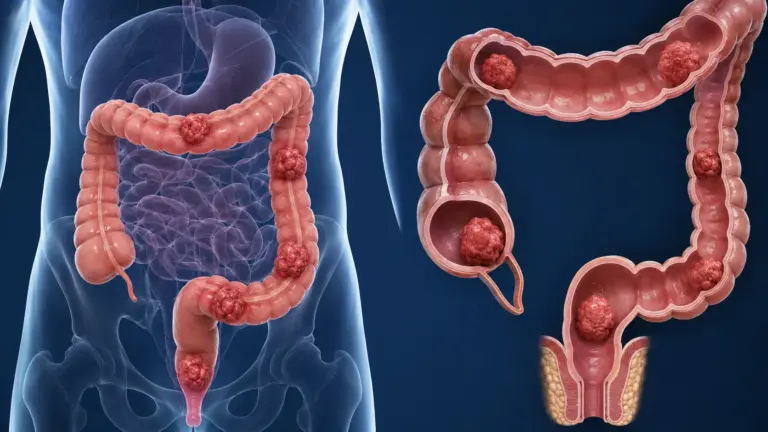
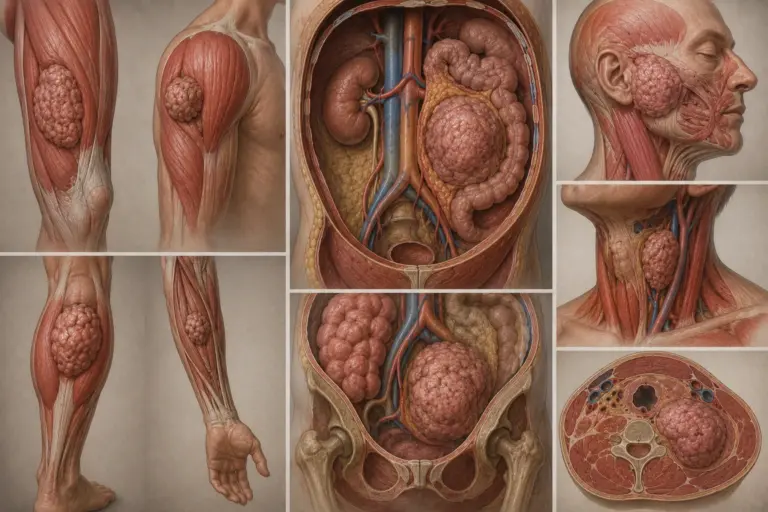
Cancer of Unknown Primary (CUP) is a cancer syndrome in which, despite the presence of biopsy-confirmed metastatic cancer, the source of the primary tumor cannot be determined despite detailed clinical, radiological, and pathological examinations. This group of diseases is considered a distinct type of cancer in its own right because its biological characteristics, clinical presentation, and metastasis pattern differ from those of known primary tumors.
According to NIH/PMC data, CUP is the 6th to 8th most common cancer worldwide, accounting for 2.3–5% of all malignancies. It is more common in men than in women, and the median age at diagnosis is between 60 and 75. With advances in diagnostic methods over the past 50 years, the incidence of CUP has decreased; according to U.S. SEER data, it has accounted for less than 2% of all cancers since 2007.
According to Assoc. Prof. Dr. Nilay Şengül, the most critical step in diagnosing cancers of unknown primary is ensuring that the patient undergoes a detailed clinical and radiological evaluation prior to biopsy. According to the protocol we follow at Memorial Şişli Hospital, in addition to standard screening tests, immunohistochemistry and, if necessary, molecular profiling tests are scheduled for every patient with suspected CUP. This approach increases the rate of identifying the primary tumor to 70–90%.
Classification of Cancers of Unknown Primary
CUP patients are divided into two main groups based on their clinical and pathological characteristics. This classification directly influences treatment strategy and prognosis.
Favorable Subgroup
Patients in this group exhibit limited metastatic spread and are highly likely to respond to specific treatments. Squamous cell carcinomas presenting with lymph node involvement in the head and neck region, extragonadal germ cell tumor-like syndromes, adenocarcinomas with a single bone metastasis, and peritoneal carcinomatosis (ovarian cancer-like) fall into this group. The 5-year survival rate in this subgroup is 15–20%.
Unfavorable Subgroup
This subgroup is characterized by multiple organ metastases, liver or bone involvement, and a histology of adenocarcinoma or poorly differentiated carcinoma. The median survival for patients in this group is 6–12 months. According to NCI data, the vast majority of these patients (80–85%) fall into the unfavorable subgroup, and effective treatment regimens are limited.
| Characteristics | Favorable Subgroup | Poor-Prognosis Subgroup |
|---|---|---|
| Metastasis Pattern | Limited (single lymph node, single bone) | Multiorgan involvement |
| Histology | Squamous cell, germ cell | Adenocarcinoma, poorly differentiated |
| Median survival | 12–36 months | 6–12 months |
| Treatment approach | Local (surgery, radiation therapy) | Systemic (chemotherapy, immunotherapy) |
| 5-year survival rate | 15–20% | <5% |
Treatment for Cancers of Unknown Primary
Treatment for cancer of unknown primary origin is personalized based on the patient’s subgroup, performance status, and molecular profile. According to NCCN and ESMO guidelines, a multidisciplinary approach is essential in treatment planning.
Diagnostic Evaluation and Immunohistochemistry
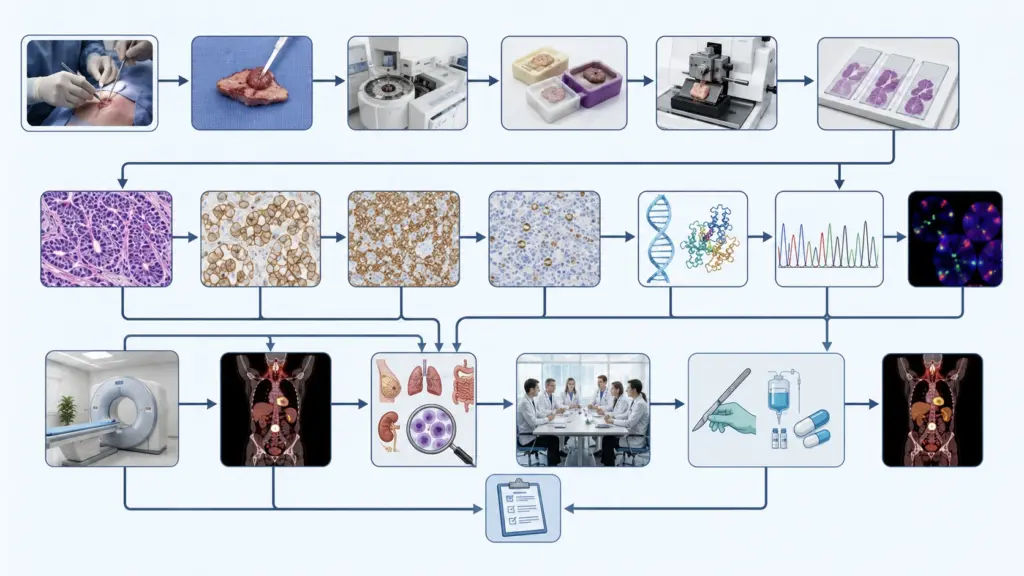
The diagnostic process follows a systematic algorithm. The first step involves a detailed medical history, physical examination, complete blood count, biochemistry panel, LDH, and urinalysis. Chest X-ray and abdominal CT scan are standard imaging tests. An immunohistochemistry (IHC) panel is performed on the biopsy specimen; this panel plays a critical role in determining the tumor’s likely primary site.
Examples of IHC markers and predictions of the primary site:
- TTF-1 (+), CK7 (+): Lung adenocarcinoma
- CDX-2 (+), CK20 (+): Gastrointestinal carcinoma
- PSA (+): Prostate cancer
- GCDFP-15 (+), ER/PR (+): Breast cancer
- Hep-Par (+): Hepatocellular carcinoma
- P40 (+), p63 (+): Squamous cell carcinoma
Molecular profiling (gene expression analysis and NGS) can predict the primary tumor site with 70–90% accuracy. However, according to the CUPISCO Phase II study published in 2025, no statistically significant difference in progression-free survival (PFS) was found between molecular profiling-based site-specific treatment and empirical platinum-based chemotherapy (6.1 months vs. 4.4 months).
Chemotherapy
Empirical chemotherapy is the standard first-line treatment for CUP patients with a poor prognosis. Platinum-based dual-agent regimens (cisplatin + paclitaxel or cisplatin + gemcitabine) are the most commonly used protocols. According to real-world data published in *Nature* in 2021, the objective response rate in first-line chemotherapy is 15%, and progression-free survival is 4.4 months. In second-line chemotherapy, the response rate drops to 8.5%, and median PFS is 2.1 months.
Immunotherapy
Immune checkpoint inhibitors (ICIs) have emerged as a promising option for CUP treatment. The FDA has approved pembrolizumab for patients with high tumor mutation burden (TMB-H), high microsatellite instability (MSI-H), or dMMR, regardless of tumor type; this approval also covers CUP patients.
A multicenter retrospective study published in BMC Cancer in 2025 evaluated 190 CUP patients. The median overall survival of patients in the subgroup with a poor prognosis who received immunotherapy was significantly longer than that of patients who did not receive immunotherapy (29.27 months vs. 10.43 months; HR: 0.435; p=0.0006). In the first-line combination of chemotherapy and immunotherapy, median overall survival was reported as 45.53 months, and median progression-free survival as 11.33 months.
In Phase II trials with nivolumab and pembrolizumab, objective response rates were reported as 22.2% and 20.0%, respectively. In patients with high TMB, the median PFS and median OS were both 18.3 months with the nivolumab + ipilimumab combination.
Targeted Therapies
Treatments targeting actionable mutations identified through molecular profiling may be applicable in selected CUP patients. According to the NCI PDQ guidelines, the following molecular targets are considered actionable:
- HER2 positivity: Trastuzumab-based therapies
- BRAF V600E mutation: Vemurafenib, dabrafenib
- NTRK fusion: Larotrectinib, entrectinib
- RET fusion: Selpercatinib, pralsetinib
- MET amplification: Crizotinib, capmatinib
- MSI-H/dMMR: Pembrolizumab
However, the positivity rate for these specific targets is low in CUP patients. For example, while the EGFR mutation rate is only 5.2%, clinically non-actionable mutations such as TP53 (46.4%), KRAS (19.6%), and CDKN2A (18.6%) are more common.
Clinical Assessment by Assoc. Prof. Dr. Nilay Şengül
In my clinical practice, I frequently observe the following: Patients diagnosed with cancer of unknown primary (CUP) typically spend an average of 3–6 months consulting various medical specialties prior to diagnosis, and treatment initiation is delayed during this process. With the multidisciplinary CUP protocol we implement at Memorial Şişli Hospital, we aim to reduce this period to 2–4 weeks.
According to Assoc. Prof. Dr. Nilay Şengül, the most significant paradigm shift in the treatment of cancers of unknown primary is the transition from an “empirical chemotherapy” approach to “molecular profiling-based personalized treatment.” In particular, the use of immunotherapy and targeted therapies significantly prolongs survival in patients with a poor prognosis. In patients with high TMB or MSI-H, pembrolizumab yields superior results compared to standard chemotherapy. This approach has the potential to transform CUP from an “untreatable” disease into a “manageable” chronic condition.
From Diagnosis to Recovery: How Does the Process Proceed?
- Initial Examination and Evaluation: The patient’s symptoms, family history, and tobacco and alcohol use are thoroughly assessed. During the physical examination, all lymph node regions, the liver, spleen, and other organs are palpated. Assoc. Prof. Dr. Şengül emphasizes that, in her clinical practice, reviewing all of the patient’s previous test results and biopsy findings during the initial consultation accelerates the diagnostic process.
- Diagnostic Tests:
- Blood Tests: Complete blood count, biochemistry, LDH, tumor markers (CEA, CA 19-9, CA 125, AFP, beta-hCG)
- Imaging: Chest X-ray, abdominal/pelvic CT, whole-body PET-CT (metastasis screening)
- Biopsy and pathology: Immunohistochemistry panel, repeat biopsy if necessary
- Molecular Tests: Gene expression profiling, NGS (panel of 300+ cancer genes), TMB, MSI, PD-L1 analysis
- Multidisciplinary Evaluation: An individualized treatment plan is developed during a tumor board meeting comprising specialists in medical oncology, radiation oncology, pathology, radiology, and nuclear medicine. During this meeting, the likely primary site is discussed in light of the IHC and molecular test results.
- Treatment Implementation:
- Favorable subgroup: Surgical resection and/or radiation therapy (local treatment)
- Poor-prognosis subgroup: Systemic therapy (chemotherapy, immunotherapy, targeted therapy)
- Chemotherapy: 3-week cycles, 4–6 cycles total
- Immunotherapy: Administered at 2- to 3-week intervals, long-term
- Response Evaluation: Response is evaluated via CT scan after every 2–3 cycles. Complete response, partial response, stable disease, or progression are determined according to RECIST criteria.
- Follow-up and Monitoring: Follow-up visits are scheduled every 6–8 weeks for the first 2 years after treatment, and every 3 months thereafter. Each visit includes a physical examination, blood tests, and imaging. Thyroid function tests and monitoring of adrenal function are recommended for patients receiving immunotherapy.
Frequently Asked Questions
What is cancer of unknown primary origin?
Cancer of unknown primary (CUOP) is a disease syndrome in which, despite a biopsy-confirmed metastatic cancer, the primary tumor source cannot be identified even after detailed investigations. It accounts for 2–5% of all cancer diagnoses. These patients are classified as a distinct category rather than as metastases of a known cancer type.
How is cancer of unknown primary diagnosed?
The diagnosis is made using a three-pronged approach: biopsy, immunohistochemistry (IHC), and imaging. A panel of IHC markers is applied to the biopsy specimen to estimate the likely primary source. PET-CT is used for whole-body metastasis screening. If necessary, molecular profiling (gene expression analysis) can identify the primary source with 70–90% accuracy. The diagnostic algorithm is standardized according to NICE (National Institute for Health and Care Excellence) guidelines.
Can cancer with an unknown primary be treated?
Yes, it can be treated. Patients in the favorable subgroup (limited metastasis, squamous cell histology) may achieve long-term survival with surgery or radiation therapy. In the poor-prognosis subgroup, the disease can be controlled with chemotherapy, immunotherapy, and targeted therapies. Immunotherapy, in particular, can extend median survival to 29 months in patients with a poor prognosis. However, CUP is generally managed as a chronic disease.
What is the life expectancy for cancer of unknown primary?
Life expectancy varies by subgroup. In the favorable subgroup, the 5-year survival rate is 15–20%, and median survival is 12–36 months. In the poor-prognosis subgroup, median survival is 6–12 months. In patients with a poor prognosis who receive immunotherapy, this duration can be extended to up to 29 months. The response to immunotherapy is better in cases of high TMB or MSI-H.
What causes cancer of unknown primary?
The exact cause is unknown. There are three main hypotheses: (1) Cancer development from stem cells (without a premalignant lesion), (2) Rapid metastasis of the primary tumor at a very early stage while it remains small, (3) Aggressive behavior and resistance to chemotherapy due to chromosomal instability. Risk factors include heavy smoking, obesity (increased waist circumference), advanced age, and low educational level.
Can cancer of unknown primary be treated with immunotherapy?
Yes. The FDA has approved pembrolizumab for use in cases of high TMB, MSI-H, or dMMR, regardless of tumor type. In Phase II trials with nivolumab and pembrolizumab, objective response rates ranged from 20% to 22%. In a multicenter study published in 2025, the combination of chemotherapy and immunotherapy extended median survival to 45.5 months in a subgroup with a poor prognosis. According to Assoc. Prof. Dr. Şengül, PD-L1 and TMB testing can predict patients’ potential response to immunotherapy.
Cancers of unknown primary origin are among the most challenging types of cancer to diagnose and treat. However, thanks to immunohistochemistry, molecular profiling, and modern treatment options (immunotherapy, targeted therapies), the prognosis for this disease has improved significantly in recent years. Early multidisciplinary evaluation and personalized treatment approaches are improving patients’ survival and quality of life.
To discuss your specific situation regarding cancers of unknown primary origin and to have your questions answered, you can consult with Assoc. Prof. Dr. Nilay Şengül. To schedule an appointment at her clinic at Memorial Şişli Hospital, please call 444 7 888.
Sources
- PMC/NIH, "Cancer of Unknown Primary: A Review on Clinical Guidelines in the Development and Targeted Management of Patients with the Unknown Primary Site" — https://pmc.ncbi.nlm.nih.gov/articles/PMC6820325/
- PMC/NIH, "Clinical efficacy of immune checkpoint inhibitors for cancer of unknown primary: a multi-center retrospective study" — https://pmc.ncbi.nlm.nih.gov/articles/PMC12357449/
- Nature/Scientific Reports, "Real-world data analysis of patients with cancer of unknown primary" — https://www.nature.com/articles/s41598-021-02543-1
- NCI/NIH, "Cancer of Unknown Primary Treatment (PDQ®)" — https://www.cancer.gov/types/unknown-primary/hp/unknown-primary-treatment-pdq
- Indian Journal of Cancer, "Incidence of Cancers of Unknown Primary Origin in India and Global Trends" — https://journals.lww.com/indianjcancer/fulltext/2022/59030/incidence_of_cancers_of_unknown_primary_origin_in.6.aspx
- QIMS/AME Groups, "Exceptional response to immunotherapy monotherapy in a patient with an unfavorable subset of cancer of unknown primary" — https://qims.amegroups.org/article/view/118001/html