
📌 What You Need to Know in a Nutshell
- Colorectal cancer results from the uncontrolled proliferation of epithelial cells in the lining of the colon and rectum; approximately 1.9 million new cases are diagnosed worldwide each year.
- The 5-year survival rate is 91.3% for early-stage (localized) disease; this rate drops to 75.2% for stage III and to 16.9% for metastatic disease.
- In MSI-H/dMMR metastatic patients, the combination of nivolumab and ipilimumab reduces the risk of progression by 79% compared to chemotherapy.
- Regular screening (colonoscopy) increases the likelihood of curative treatment by enabling the detection of the disease in stages 0–I.
Colorectal cancer is a malignant neoplasm arising from glandular epithelial cells in the mucosa of the colon and rectum. Worldwide, approximately 1.9 million new cases are diagnosed each year, resulting in more than 900,000 deaths. The disease is one of the most common types of cancer among people over 50; in recent years, an increase has also been observed among young adults under 50. Histologically, adenocarcinoma (95%) is the most common subtype.
[IMAGE SUGGESTION: An anatomical diagram showing the anatomy of the colon and rectum and the regions where colorectal cancer develops — Alt text: "Diagram of the anatomy of the colon and rectum and the regions where adenocarcinoma develops"]
What Is Colorectal Cancer?
Colorectal cancer is a malignant tumor originating in the mucosal layer of the colon and rectum. Approximately 95% of cases are adenocarcinomas; of these, 10–15% are mucinous adenocarcinomas, and 1% are signet-ring cell carcinomas. Cancer development typically follows a step-by-step process known as the adenoma-carcinoma sequence: normal mucosa → hyperplastic polyp → adenomatous polyp → high-grade dysplasia → invasive carcinoma. This process takes an average of 10–15 years.
Tumor location is important in terms of treatment and prognosis. Left-sided colon cancers (distal colon, rectosigmoid) more frequently present with symptoms such as obstruction and bleeding, whereas right-sided colon cancers (cecum, ascending colon) tend to have a more insidious course and may present with anemia. Rectal cancers, on the other hand, carry a risk of spreading to pelvic structures.
Molecular subtyping also plays a critical role in treatment selection. Tumors with MSI-H (high microsatellite instability) or dMMR (deficient mismatch repair) status respond better to immunotherapy, whereas tumors with RAS mutations are resistant to anti-EGFR therapies. For this reason, MSI/MMR, RAS, and BRAF mutation analysis should be performed as standard in all patients with metastatic disease.
Symptoms of Colorectal Cancer
The symptoms of colorectal cancer vary depending on the stage and tumor location. In the early stages, 30–40% of patients are asymptomatic and are detected during screening programs. The most common symptoms in patients who do experience symptoms are as follows:
- Changes in bowel habits: Constipation, diarrhea, or narrow stools (“pencil-thin stools”) are among the earliest symptoms.
- Occult or overt bleeding: Bright red blood may be present in tumors of the rectum and distal colon, while dark-colored, melena-like stools may be seen in right-sided tumors.
- Abdominal pain and bloating: These are particularly prominent in right-sided tumors and in patients who develop an obstruction.
- Fatigue and anemia: Iron-deficiency anemia may develop as a result of chronic occult bleeding; hemoglobin levels <11 g/dL are of particular concern.
- Unintentional weight loss: A loss of more than 5% of body weight over the past 6 months.
- Tenesmus (sensation of incomplete evacuation): Particularly prominent in rectal tumors.
Symptoms of a medical emergency are also present. Complete bowel obstruction (projectile vomiting, bloating, cessation of stool and gas passage), perforation (acute abdominal pain, signs of peritonitis), or severe bleeding (hemodynamic instability) may require emergency surgery. The mortality rate is high in these cases.
What Causes Colorectal Cancer?
Both environmental and genetic factors play a role in the development of colorectal cancer. The most important modifiable risk factors for the development of the disease are as follows:
| Risk Factor | Increased Risk | Mechanism |
|---|---|---|
| Age (>50) | 2–3 times per 10 years | Cumulative DNA damage, epigenetic changes |
| Red meat / processed meat | 1.2–1.5 times | Heterocyclic amines, N-nitroso compounds |
| Cigarettes | 1.2–1.5 times | Chronic inflammation, DNA adduct formation |
| Obesity (BMI >30) | 1.3–1.5 times | Insulin resistance, increased IGF-1, adipokine dysregulation |
| Physical inactivity | 1.2–1.4 times | Prolonged intestinal transit time, insulin resistance |
| Family history (first-degree) | 2–3 times | APC, MMR gene mutations |
| Type 2 diabetes | 1.2–1.4 times | Hyperinsulinemia, IGF signaling pathway activation |
Hereditary syndromes include FAP (Familial Adenomatous Polyposis), HNPCC/Lynch syndrome (MMR gene mutations), MUTYH-associated polyposis, and Peutz-Jeghers syndrome. The lifetime risk of colorectal cancer in Lynch syndrome carriers is between 50% and 80%, and screening programs should begin at ages 20–25 for these patients.
There are also protective factors. A high-fiber diet, calcium and vitamin D intake, regular physical activity, aspirin use (for those over 50), and smoking cessation reduce the risk. Colonoscopy screening, combined with polyp removal, is the only method that provides both diagnosis and prevention.
Stages of Colorectal Cancer
The stages of colorectal cancer are determined according to the AJCC TNM 8th Edition classification. Staging is based on the extent to which the tumor has penetrated the layers of the bowel wall (T), regional lymph node involvement (N), and the presence of distant metastases (M). According to SEER data, 34% of patients are diagnosed at the localized stage, 37% at the regional stage, and 23% at the metastatic stage.
5-year survival rates by stage:
| Stage | TNM Classification | 5-Year Survival (%) | Treatment Approach |
|---|---|---|---|
| Stage 0 | Carcinoma in situ (confined to the mucosa) | >95% | Endoscopic polypectomy |
| Stage I | T1–T2, N0, M0 | 92–95% | Surgical (resection) |
| Stage II | T3–T4, N0, M0 | 75–85% | Surgery ± adjuvant chemotherapy (high-risk) |
| Stage III | T1–T4, N1–N2, M0 | 50–75% | Surgery + adjuvant chemotherapy |
| Stage IV | Any T, Any N, M1 | 10–17% | Systemic therapy ± surgery |
Stage 1 Colorectal Cancer
Stage I colorectal cancer is an early stage in which the tumor is confined to the mucosa or submucosa, with no lymph node or distant metastases. The 5-year survival rate is between 92% and 95%. Surgical resection (hemicolectomy or segmental resection) is sufficient for treatment; adjuvant therapy is generally not recommended. Endoscopic treatment may also be an option for T1 tumors that can be completely removed endoscopically.
Stage 2 Colorectal Cancer
Stage II colorectal cancer is a stage in which the tumor has reached the muscularis propria or serosa but there is no lymph node involvement. The 5-year survival rate is between 75% and 85%. In high-risk Stage II patients (T4, perforation, obstruction, poorly differentiated, lymphovascular invasion), adjuvant chemotherapy (CAPOX or FOLFOX) should be considered. According to the IDEA study, a 3-month course of CAPOX is non-inferior to a 6-month course in low-risk patients.
Stage 3 Colorectal Cancer
Stage 3 colorectal cancer is the stage in which the tumor has spread to regional lymph nodes (N1: 1–3 nodes, N2: ≥4 nodes). The 5-year survival rate ranges from 50% to 75%. The standard approach to treatment is surgical resection plus adjuvant chemotherapy. Adjuvant treatment options:
- CAPOX: 3 months (4 cycles) for low-risk patients; 6 months (8 cycles) for high-risk patients (T4 and/or N2)
- FOLFOX: 6 months (12 cycles) – standard duration
- Capecitabine monotherapy: 6 months, for patients over 70 years of age or those who cannot tolerate oxaliplatin
Stage 4 Colorectal Cancer
Stage 4 colorectal cancer (metastatic disease) refers to the spread of the tumor to distant organs such as the liver, lungs, peritoneum, or bones. The 5-year survival rate ranges from 10% to 17%. The treatment approach for stage 4 colorectal cancer is personalized based on the molecular profile:
- MSI-H/dMMR: Pembrolizumab or nivolumab + ipilimumab (first-line); According to the CheckMate-8HW study, nivolumab + ipilimumab reduces the risk of progression-free survival (PFS) by 79% compared to chemotherapy, with a 24-month PFS rate of 72%.
- MSS/RAS wild-type: FOLFOX/FOLFIRI + bevacizumab or cetuximab (depending on tumor location—right or left side)
- RAS mutant: FOLFOX/FOLFIRI + bevacizumab
- BRAF V600E mutant: Encorafenib + cetuximab + binimetinib (BEACON study)
Liver metastasis is the most common metastatic pattern in colorectal cancer. Metastasisectomy (surgical removal of liver metastases) is possible in 20–30% of patients with liver metastases, and 5-year survival in these patients can reach 30–40%.
Colorectal Cancer Treatment
Colorectal cancer treatment is personalized based on the stage, tumor location, molecular profile, and the patient’s overall condition. Treatment approaches are categorized into two main groups: localized disease (Stages 0–III) and metastatic disease (Stage IV).
Treatment of Localized Disease:
- Surgical treatment: This forms the foundation of colorectal cancer treatment. The goal is complete resection of the tumor (R0) and removal of an adequate number of lymph nodes (>12 nodes).
- Adjuvant chemotherapy: It is administered to Stage III patients and high-risk Stage II patients. According to the IDEA study, a 3-month course of CAPOX may be sufficient for low-risk patients.
- Neoadjuvant therapy: In rectal cancers (particularly Stage II–III), preoperative chemoradiotherapy or a short course of radiation therapy is standard; this approach improves sphincter preservation and complete response rates.
Treatment of Metastatic Disease:
- Systemic chemotherapy: FOLFOX (5-FU + leucovorin + oxaliplatin), FOLFIRI (5-FU + leucovorin + irinotecan), and CAPOX (capecitabine + oxaliplatin) are the primary regimens.
- Targeted Therapies: Bevacizumab (anti-VEGF), cetuximab/panitumumab (anti-EGFR, RAS wild-type), aflibercept, regorafenib.
- Immunotherapy: Pembrolizumab, nivolumab, or nivolumab + ipilimumab in MSI-H/dMMR patients; the efficacy of immunotherapy is limited in MSS patients.
- Metastasis resection: In selected patients with liver, lung, or peritoneal metastases, surgical or ablation techniques (RFA, microwave) may be performed.
Treatment comparison table:
| Treatment Method | Indication | Median PFS/OS | Side Effects |
|---|---|---|---|
| FOLFOX + Bev | Metastatic, first-line | PFS: 9–10 months / OS: 20–22 months | Neurotoxicity, neutropenia, hypertension |
| FOLFIRI + Bev | Second-line (after FOLFOX) | PFS: 7.7 months / OS: 14.1 months | Diarrhea, neutropenia, fatigue |
| Pembrolizumab | MSI-H/dMMR metastatic | PFS: 16.5 months / OS: NR | Thyroiditis, hepatitis, colitis, pneumonitis |
| Nivo + Ipi | MSI-H/dMMR metastatic | 24-month PFS: 72% | Hepatitis, colitis, hypophysitis, skin rash |
| CAPOX (Adjuvant) | Stage III, low risk | 3-year DFS: 75.9% | Neurotoxicity, hand-foot syndrome, diarrhea |
Colon Cancer Surgery
Colon cancer surgery is the primary treatment for localized disease. The goal of surgery is complete resection of the tumor (R0), adequate surgical margins (>1 cm), and removal of at least 12 regional lymph nodes. The type of surgery is determined based on the tumor’s location:
- Right hemicolectomy: For tumors of the cecum, ascending colon, and the right half of the transverse colon.
- Left hemicolectomy: For tumors of the splenic flexure and descending colon.
- Anterior resection: For tumors of the rectosigmoid and upper rectum; the sphincter is preserved.
- Abdominoperineal resection (APR): For tumors of the lower rectum; a permanent colostomy may be required.
- Total mesorectal excision (TME): The standard procedure for rectal cancer; ensures complete removal of the mesorectal fascia.
Comparison of surgical approaches:
| Approach | Hospital Stay | Pain | Recovery Time | Oncological Outcome |
|---|---|---|---|---|
| Open Surgery | 7–10 days | High | 6–8 weeks | Equivalent |
| Laparoscopic | 3–5 days | Moderate | 3–4 weeks | Equivalent |
| Robotic Surgery | 2–4 days | Low | 2–3 weeks | Equivalent |
According to Assoc. Prof. Dr. Nilay Şengül, laparoscopic and robotic surgery improve the quality of TME, particularly in rectal cancers, while reducing hospital stay duration and complication rates. However, the choice of surgical approach should be tailored to the tumor’s stage, location, and the surgeon’s experience.
Risks of Colon Cancer Surgery
The risks of colorectal cancer surgery vary depending on the type of surgery, the patient’s age, and comorbidities. The overall surgical complication rate ranges from 15% to 30%.
- Anastomotic leak: A leak at the site where the intestines are joined; the incidence ranges from 3% to 19%. It is more common in rectal surgeries. In high-risk patients, the creation of a temporary diverting stoma is recommended.
- Surgical site infection: The incidence is 5–15%; preoperative antibiotic prophylaxis and shaving-free preparation reduce the risk.
- Ileus (cessation of bowel movements): Common in the early postoperative period; oral feeding is delayed, and nasogastric decompression may be required.
- Bleeding: Early or late-stage bleeding; the need for transfusion ranges from 5% to 10%.
- Early-stage bowel obstruction: May develop as a result of adhesions or anastomotic stricture.
- Pulmonary complications: Atelectasis, pneumonia; the risk is increased, particularly in elderly patients with lung disease.
Risk reduction strategies include the ERAS (Enhanced Recovery After Surgery) protocol, preoperative optimization, minimally invasive surgery, and an experienced multidisciplinary team. The ERAS protocol reduces the average hospital stay by 2–3 days.
Post-Colon Cancer Surgery
Follow-up and rehabilitation after colorectal cancer surgery are critical processes that affect long-term survival.
Early phase (0–4 weeks): Vital signs and drainage are monitored during the first 24–48 hours. Oral feeding is gradually initiated once bowel movements resume (typically on days 2–4). Pain is managed using multimodal analgesia. Patients undergoing the ERAS protocol may be discharged within 2–4 days.
Adjuvant therapy planning: The decision to administer adjuvant chemotherapy is based on the pathology results. In Stage III patients, adjuvant therapy should be initiated within 4–8 weeks after surgery. According to the IDEA study, a 3-month course of CAPOX may be sufficient for low-risk Stage III patients; this approach reduces the risk of neurotoxicity and increases treatment completion rates.
Follow-up schedule:
- First 2 years: Physical examination, CEA, liver function tests, and chest and abdominal CT scans every 3–6 months
- Years 3–5: Same tests every 6 months
- After 5 years: Annual follow-up
- Colonoscopy: 6–12 months after surgery, then every 3 years (every 5 years if negative)
Monitoring CEA (Carcinoembryonic Antigen) levels is crucial for the early detection of recurrence. Postoperative normalization of CEA levels is expected; an increase in CEA (>5 ng/mL) requires further testing to rule out recurrence or metastasis.
[VISUAL SUGGESTION: Diagram of the follow-up and recovery process after colorectal cancer surgery — Alt text: “Diagram of the follow-up program and recovery process after colorectal cancer surgery”]
Clinical Assessment by Assoc. Prof. Dr. Nilay Şengül
In my clinical practice, I frequently observe the following: Approximately 60% of patients diagnosed with colorectal cancer are at an advanced stage (Stage III–IV) at the time of diagnosis. This situation is related to the insufficient widespread adoption of screening programs in Turkey and patients’ tendency to ignore early symptoms. The rising incidence among young adults under 50, in particular, indicates a poorer prognosis due to more aggressive disease biology and delayed diagnosis.
According to Assoc. Prof. Dr. Nilay Şengül, molecular profiling has brought about a revolutionary change in the treatment of colorectal cancer. Identifying the MSI-H/dMMR status offers the chance of long-term survival with immunotherapy in 15% of patients. Results from the CheckMate-8HW study have demonstrated the superiority of the nivolumab + ipilimumab combination over chemotherapy. Therefore, MSI/MMR, RAS, and BRAF analysis is mandatory for all metastatic patients.
Assoc. Prof. Dr. Şengül emphasizes the need to personalize the duration of adjuvant therapy in clinical practice. Based on the results of the IDEA study, she notes that a 3-month course of CAPOX is non-inferior to a 6-month course in low-risk Stage III patients and that this approach reduces the risk of neurotoxicity. However, in high-risk (T4 and/or N2) patients, 6-month treatment remains the standard.
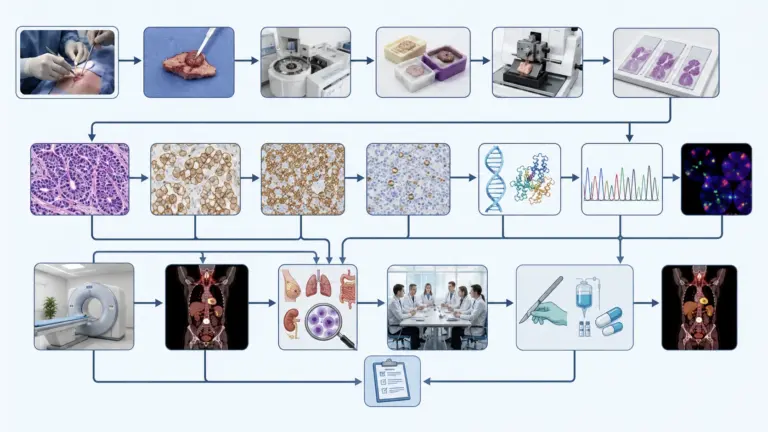
From Diagnosis to Recovery: How Does the Process Proceed?
- Initial Examination and Evaluation: A detailed medical history is taken from the patient; bowel habits, history of bleeding, family history, weight changes, and dietary habits are recorded. The physical examination includes assessment for an abdominal mass, hepatomegaly, lymph nodes, and a digital rectal exam. Laboratory tests include a complete blood count, CEA, liver function tests, creatinine, and a coagulation profile.
- Imaging and Endoscopy: Colonoscopy is the gold standard diagnostic method; the tumor’s location, size, and biopsy results are evaluated. Contrast-enhanced abdominal and chest CT is the standard for staging. In rectal cancers, pelvic MRI is mandatory for evaluation of the mesorectal fascia and sphincter. The baseline CEA level is recorded.
- Surgical Process: Preoperative anesthesia evaluation, nutritional status assessment, and cardiac risk scoring are performed. Neoadjuvant therapy may be planned for rectal cancer. The average duration of surgery is 2–5 hours; in laparoscopic procedures, the duration may be longer than in open surgery. Anastomotic integrity is tested (methylene blue test or air test).
- Hospital Stay and Discharge: For patients undergoing the ERAS protocol, a hospital stay of 2–4 days is anticipated. Prior to discharge, the patient must be able to tolerate oral intake, pain must be controlled, and drains must be removed. Patients who have undergone stoma creation receive stoma care training.
- Post-Discharge Recovery: Light activity is recommended for the first 2 weeks; heavy lifting (>5 kg) is restricted for 4–6 weeks. Return to work varies between 3 and 6 weeks, depending on the surgical approach. Adjuvant chemotherapy is initiated within 4–8 weeks after surgery. Follow-up schedule: CEA testing and imaging are performed every 3–6 months for the first 2 years, and every 6 months for the following 3 years.
Colon Cancer Blood Test
The parameters evaluated in the colorectal cancer blood test play an important role in both diagnosis and follow-up. Laboratory findings are used to assess anemia, liver function abnormalities, and tumor markers.
Key laboratory parameters:
- CEA (Carcinoembryonic Antigen): This is the most important tumor marker for colorectal cancer. The normal value is &<5 ng/mL. Elevated CEA (>5 ng/mL) has prognostic value in staging and follow-up. Postoperative normalization of CEA is expected; an increase may indicate recurrence.
- CA 19-9: May be elevated, particularly in the presence of peritoneal metastases and pancreatic involvement.
- Complete blood count: Anemia (Hb <11 g/dL in men, <11 g/dL in women) and microcytic iron-deficiency anemia may be early findings in right-sided tumors.
- Liver function tests: AST, ALT, ALP, and GGT may be elevated in the presence of liver metastases.
- Creatinine: Assesses kidney function for chemotherapy planning.
Can colorectal cancer be detected through a blood test? Colorectal cancer cannot be diagnosed directly with a single blood test. However, CEA, complete blood count, and liver function tests are helpful in the diagnostic process. Currently, circulating tumor DNA (ctDNA) analyses are in the research phase for monitoring minimal residual disease and the early detection of recurrence. The FDA-approved multi-target DNA stool test (Cologuard) can be used for screening purposes.
According to Assoc. Prof. Dr. Nilay Şengül, CEA monitoring is the most valuable non-invasive method for the early detection of recurrence following adjuvant therapy. In patients with elevated CEA levels, a PET-CT or contrast-enhanced CT scan should be performed to search for metastases.
Frequently Asked Questions
How is colorectal cancer diagnosed?
Colorectal cancer is often asymptomatic in its early stages and may not cause any symptoms. In patients who do experience symptoms, the most common signs include changes in bowel habits (constipation, diarrhea, narrow stools), blood in the urine or stool, abdominal pain, fatigue, weight loss, and tenesmus. Colonoscopy is the gold standard for diagnosis.
How does colorectal cancer develop?
Colon cancer develops when cells in the colon mucosa multiply uncontrollably as a result of genetic mutations. This process, known as the adenoma-carcinoma sequence, takes an average of 10–15 years. Mutations in the APC, KRAS, and TP53 genes accumulate sequentially during this process. Smoking, obesity, red meat consumption, physical inactivity, and family history are the most significant risk factors.
How is colorectal cancer diagnosed?
Colonoscopy is the gold standard for diagnosing colorectal cancer; it allows visualization of the tumor’s location and size, and a biopsy is taken. Contrast-enhanced abdominal and chest CT scans are used for staging. In rectal cancers, pelvic MRI is mandatory for evaluating the mesorectal fascia. Laboratory tests include CEA, a complete blood count, and liver function tests. FOBT (fecal occult blood test) and FIT are screening tests, not diagnostic methods.
Does colon cancer cause pain?
Yes, colon cancer can cause pain. Severe abdominal pain, bloating, and vomiting are particularly common in patients who develop an obstruction. While pain is less pronounced in right-sided colon cancers, tenesmus and pelvic pain are common in left-sided and rectal tumors. In advanced stages, distension of the liver capsule, bone metastases, or peritoneal carcinomatosis may cause pain.
Is colon cancer contagious?
No, colon cancer is not contagious. Cancer is a disease caused by the uncontrolled proliferation of cells resulting from genetic mutations and is not transmitted from person to person. However, certain risk factors (such as family history or hereditary syndromes like Lynch syndrome) may run in families; this is a genetic predisposition, not a contagious condition.
Foods That Are Good for Colon Cancer
Foods beneficial for colorectal cancer include high-fiber foods (whole grains, legumes, vegetables), calcium-rich foods (dairy products, leafy green vegetables), omega-3 fatty acids (fish, walnuts), and antioxidants (colorful vegetables, fruits). Red meat, processed meat, excessive alcohol consumption, and smoking should be avoided. Regular physical activity and maintaining a healthy weight also help prevent the disease.
Is colorectal cancer curable?
Colon cancer diagnosed at an early stage (Stage 0–I) can be completely cured with surgery (curative). In Stage II–III patients, long-term survival is possible with surgery plus adjuvant chemotherapy; 5-year survival rates range from 75% to 95%. In metastatic disease (Stage IV), while a complete cure is difficult to achieve, long-term disease control can be achieved in selected patients through metastasectomy and systemic therapy.
Is there a treatment for colorectal cancer?
Yes, treatment for colorectal cancer is available, and the options are quite extensive. Surgery is the primary treatment for localized disease. For metastatic disease, chemotherapy regimens such as FOLFOX, FOLFIRI, and CAPOX; targeted therapies such as bevacizumab and cetuximab; and immunotherapy agents such as pembrolizumab and nivolumab are used in patients with MSI-H/dMMR. The treatment plan is personalized based on the stage, molecular profile, and the patient’s condition.
Can colorectal cancer be detected through a blood test?
Colorectal cancer cannot be diagnosed directly through a blood test. However, the CEA (carcinoembryonic antigen) tumor marker, anemia (complete blood count), and liver dysfunction can be detected in blood tests. Currently, ctDNA analyses are in the research phase for monitoring minimal residual disease. Colonoscopy and biopsy are the gold standard for diagnosis.
How is a colorectal cancer test performed?
Colonoscopy is the gold standard diagnostic method for colorectal cancer; the entire colon and rectum are examined using a flexible endoscope, polyps are removed, and a biopsy is taken. Screening tests include FIT (fecal occult blood test), FOBT, and the multi-target DNA test (Cologuard). Contrast-enhanced CT colonography (virtual colonoscopy) can be used for imaging. Regular screening is recommended for individuals aged 45–50 and older.
How long does colon cancer surgery take?
The duration of colorectal cancer surgery varies depending on the type of surgery and the surgical approach. Open surgery typically takes 2–4 hours, laparoscopic surgery 3–5 hours, and robotic surgery 4–6 hours. In cases of rectal cancer, total mesorectal excision (TME) may take longer. The duration of surgery varies depending on the tumor’s location, obesity, previous surgeries, and complications.
Does colon cancer recur?
Yes, colon cancer can recur. The local recurrence rate is 5–10% in Stage I–II patients and 20–30% in Stage III patients. Recurrence most commonly occurs within the first 2–3 years after surgery. The liver and lungs are the most common sites of metastasis. Regular CEA monitoring and imaging are critical for the early detection of recurrence. Long–term survival can be achieved in patients for whom metastasectomy is possible.
How long do colorectal cancer patients live?
The life expectancy of colorectal cancer patients depends on the stage at diagnosis. Five-year survival rates have been reported as 91.3% for localized disease, 75.2% for regionally advanced disease, and 16.9% for metastatic disease (SEER data). Survival rates are better by stage in patients with early-onset disease (<50 years of age). In metastatic disease, IMDC-like scoring systems and molecular profiles also influence prognosis.
Is colorectal cancer fatal?
Colon cancer can be fatal, but curative treatment is possible for patients diagnosed at an early stage. Worldwide, approximately 900,000 people die from colon cancer each year. Early diagnosis and regular screening significantly reduce mortality. In metastatic disease, modern treatment options (immunotherapy, targeted therapies) extend survival. Globally, colorectal cancer ranks second among cancer-related deaths.
Colorectal cancer is a disease that offers the possibility of curative treatment through surgery when diagnosed at an early stage, but has a high mortality rate in advanced stages. The 5-year survival rate for localized disease is 91.3%, and regular screening programs play a critical role in maintaining this rate. In metastatic disease, personalized treatment based on molecular profiling significantly extends survival. In particular, immunotherapy reduces the risk of progression by 79% compared to chemotherapy in MSI-H/dMMR patients.
According to Assoc. Prof. Dr. Nilay Şengül, early diagnosis and molecular profiling are the most critical factors in colorectal cancer. Regular colonoscopy screening for individuals aged 45–50 and older, along with polyp removal, provides both diagnosis and prevention. For individuals with a family history, genetic counseling and early screening programs can be life-saving.
To assess your personal situation regarding colorectal cancer and have your questions answered, you can consult with Assoc. Prof. Dr. Nilay Şeng. To schedule an appointment at her clinic at Memorial Şişli Hospital, please call 444 7 888.
Sources
- SEER (Surveillance, Epidemiology, and End Results), “Cancer Stat Facts: Colorectal Cancer" — https://seer.cancer.gov/statfacts/html/colorect.html
- CDC/U.S. Cancer Statistics, “Colorectal Cancer Stat Bite” — https://www.cdc.gov/united-states-cancer-statistics/publications/colorectal-cancer-stat-bite.html
- Mayo Clinic, “Rectal Cancer Survival Rates” — https://www.mayoclinic.org/diseases-conditions/rectal-cancer/survival-rates/gnc-20589092
- Cao A. et al., “Long-term survival outcomes in young-onset colorectal cancer,” Colorectal Disease, 2024 — https://pmc.ncbi.nlm.nih.gov/articles/PMC11876488/
- Andre T. et al., “Nivolumab plus Ipilimumab versus Chemotherapy in MSI-H/dMMR Metastatic Colorectal Cancer (CheckMate-8HW),” New England Journal of Medicine, 2024
- Grothey A. et al., "Duration of Adjuvant Chemotherapy for Stage III Colon Cancer (IDEA),&” New England Journal of Medicine, 2018
- NCCN Clinical Practice Guidelines in Oncology: Colon/Rectal Cancer, Version 2.2024 — https://www.nccn.org/professionals/physician_gls/
- AJCC TNM Staging Manual, 8th Edition, Springer, 2017
- WHO Classification of Tumors: Tumors of the Digestive System, 5th Edition, 2019
- GLOBOCAN 2022, International Agency for Research on Cancer (IARC), World Health Organization — https://gco.iarc.fr/today