📌 What You Need to Know at a Glance
- Ovarian cancer is a malignancy that develops in the female reproductive system; in the U.S., 21,010 new cases and 12,450 deaths are projected for 2026; the 5-year overall survival rate is 52%.
- While the 5-year survival rate reaches 91.9% in early-stage (localized) cases, it drops to 31.5% in advanced-stage (metastatic) cases; only 22% of patients are diagnosed at the localized stage.
- The most common symptoms are abdominal distension and early satiety; new-onset abdominal distension in postmenopausal women must be evaluated.
- Standard treatment consists of a combination of cytoreductive surgery and platinum-taxane-based chemotherapy; in patients with BRCA mutations, maintenance therapy with a PARP inhibitor prolongs survival.
Ovarian cancer is a malignancy originating in the ovaries or fallopian tubes and is one of the most aggressive cancers of the female reproductive system. Because it is often asymptomatic in the early stages, the vast majority of patients (approximately 78%) are diagnosed at an advanced stage. However, survival rates have increased significantly with modern cytoreductive surgery, platinum-based chemotherapy, and targeted therapies (PARP inhibitors, bevacizumab).
What Is Ovarian Cancer?
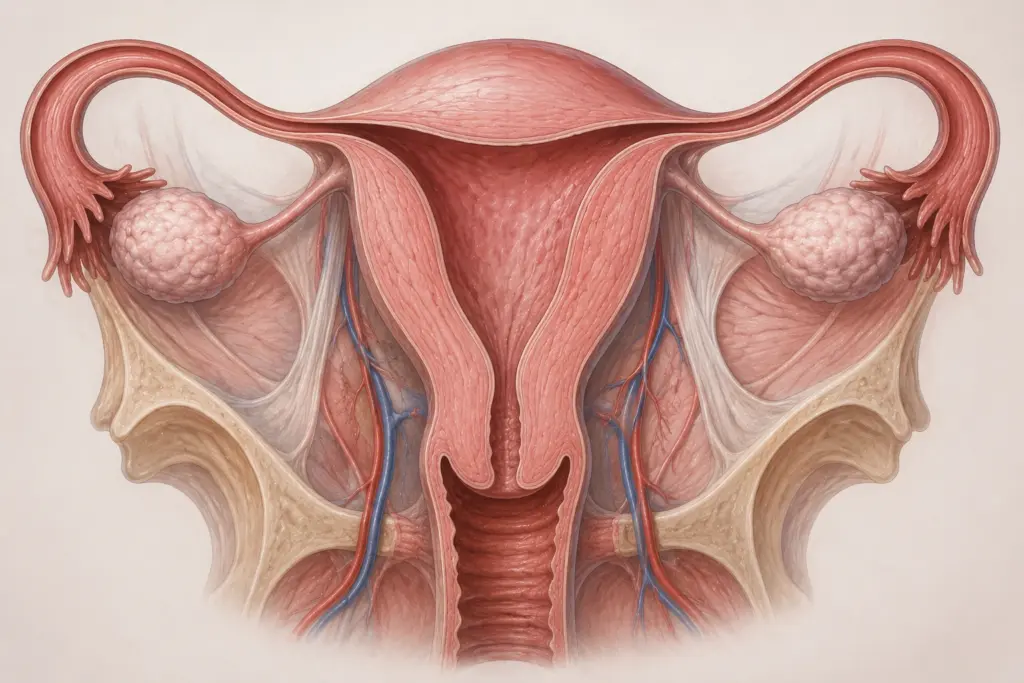
Ovarian cancer is a malignant tumor that originates in the ovarian epithelium or the fallopian tubes. Histologically, more than 90% of cases are epithelial ovarian carcinomas; most of these are high-grade serous tumors and are thought to originate in the fallopian tubes. Other types include germ cell tumors, stromal tumors, and fallopian tube/peritoneal cancers.
According to 2025 data from the American Cancer Society, 21,010 new cases of ovarian cancer are projected in the United States in 2026, and 12,450 women are expected to die from the disease. According to SEER data, the lifetime risk of developing the disease is approximately 1.1%. As of 2023, 254,621 women in the United States are living with a diagnosis of ovarian cancer. Cancer incidence decreased by an average of 1.4% per year between 2014 and 2023, while mortality decreased by 2.9% per year between 2015 and 2024.
According to Associate Dr. Nilay Şengül, ovarian cancer is described as a “silent killer” because it does not present symptoms in the early stages, and patients are typically diagnosed only after intra-abdominal spread (peritoneal carcinomatosis) has occurred. For this reason, new-onset abdominal bloating, early satiety, or weight changes in postmenopausal women must be evaluated.
What Are the Symptoms of Ovarian Cancer?
Early-stage ovarian cancer is usually asymptomatic; this is why it is called the “silent killer.” By the time symptoms appear, the disease has usually spread within the abdomen. The most common symptoms are:
- Abdominal swelling (distension) or enlargement of the abdomen: This is the most common and most noticeable symptom; it develops due to the accumulation of ascites.
- Early feeling of fullness: A sensation of fullness even after eating small portions; this is related to increased intra-abdominal pressure.
- Pelvic or abdominal pain: Constant or intermittent pain caused by tumor growth or irritation of the peritoneum.
- Frequent urination: Caused by pressure on the bladder or fluid accumulation.
- Weight changes: Sudden weight loss or weight gain; fluid accumulation, in particular, can lead to weight gain.
- Menstrual irregularities: Particularly noticeable in premenopausal women.
- Fatigue: May result from cancer-related anemia or systemic effects.
Assoc. Prof. Dr. Şengül emphasizes that in her clinical practice, approximately 70% of patients diagnosed with ovarian cancer present with “abdominal bloating and early satiety” as their initial complaint. These symptoms should be evaluated by a gynecologist or medical oncologist, especially in postmenopausal women, if they persist for more than 2–3 weeks. A pelvic exam, transvaginal ultrasound, and measurement of the CA-125 tumor marker are the first steps.
| Symptoms | Frequency | Severity |
|---|---|---|
| Abdominal bloating | Most common | High — new onset in postmenopausal women |
| Early satiety | Common | High — sign of increased intra-abdominal pressure |
| Pelvic/abdominal pain | Frequent | Moderate to high |
| Frequent urination | Moderate | Moderate |
| Weight change | Moderate | Moderate — associated with acid buildup |
What Causes Ovarian Cancer? Risk Factors
Both genetic and environmental factors play a role in the development of ovarian cancer. The most important risk factors are family history and inherited gene mutations.
Hereditary risk factors: BRCA1 and BRCA2 gene mutations significantly increase the risk of ovarian cancer. The lifetime risk is 40–60% for BRCA1 mutation carriers and 11–27% for BRCA2 carriers. Gene mutations associated with Lynch syndrome (HNPCC) also increase the risk. The risk is 2–3 times higher in women with a family history of breast or ovarian cancer.
Other risk factors:
- Advanced age: The median age at diagnosis is 63; 47.8% of patients are between the ages of 55 and 74.
- Endometriosis: It is particularly associated with endometrioid and clear cell carcinomas.
- Pelvic inflammatory disease (PID): Chronic inflammation may increase the risk.
- Height: Being taller is associated with a slight increase in risk.
- Estrogen-only menopausal hormone therapy: Increases the risk.
- Overweight: Is associated with an increased risk in rare subtypes (mucinous).
- Smoking: Is associated with the mucinous subtype.
Protective factors: Multiple births, late menarche, early menopause, use of oral contraceptives, tubal ligation or salpingectomy (removal of the fallopian tubes), and frequent aspirin use reduce the risk. According to 2025 data from the American Cancer Society, the decline in the use of oral contraceptives and menopausal hormone therapy is one of the main reasons for the recent drop in incidence.
In 2024, the IARC (International Agency for Research on Cancer) classified talcum powder as “probably carcinogenic” (Group 2A); however, asbestos contamination in talc products is a “major concern” regarding this association.
How Is Ovarian Cancer Diagnosed?
Ovarian cancer is diagnosed through clinical examination, imaging, tumor markers, and surgical pathology. Unfortunately, there is no effective screening test; therefore, prophylactic surgery is recommended for high-risk women (BRCA mutation carriers).
Diagnostic Process
- Detailed medical history and physical examination: Family history, duration, and characteristics of symptoms are assessed. A pelvic examination and rectovaginal examination are performed.
- Transvaginal ultrasound: This is the primary imaging method; the size, structure (solid/cystic/complex), and vascularization of ovarian masses are evaluated.
- CA-125 tumor marker: It is elevated in 80% of cases of epithelial ovarian cancer; however, it may also be elevated in endometriosis, fibroids, and during menstruation (it has low specificity).
- CT or MRI: These are used to assess intra-abdominal spread, lymph node involvement, and distant metastases.
- Surgical and pathological diagnosis: A definitive diagnosis is established through histopathological examination of a biopsy specimen obtained via laparoscopy or laparotomy.
Screening programs for ovarian cancer are limited. In high-risk women (BRCA1/2 mutation carriers), transvaginal ultrasound and CA-125 measurement are recommended every 6 months; however, the contribution of this approach to early diagnosis is limited. Prophylactic bilateral salpingo-oophorectomy (removal of the ovaries and fallopian tubes) significantly reduces the risk in high-risk women. In women at average risk, opportunistic salpingectomy (removal of the fallopian tubes) performed during pelvic surgery for other reasons may reduce the risk.
According to Assoc. Prof. Dr. Nilay Şengül, the most significant cause of delayed diagnosis in ovarian cancer is patients attributing symptoms to “aging,” “digestive problems,” or “menopausal symptoms.” In postmenopausal women, new-onset abdominal bloating and early satiety should always be evaluated if they persist for more than 2–3 weeks.
Stages of Ovarian Cancer
Ovarian cancer staging is determined by the FIGO (International Federation of Gynecology and Obstetrics) and is based on surgical findings. The stage directly affects the treatment strategy and prognosis.
| FIGO Stage | Definition | 5-Year Survival Rate |
|---|---|---|
| IA | Confined to a single ovary and within the capsule | >90% |
| IB | In both ovaries, within the capsule | >90% |
| IC | Ovarian involvement is limited but with capsule rupture or positive ascites | >90% |
| II | Spread to pelvic structures (uterus, fallopian tubes) | ~70% |
| IIIA | Microscopic intra-abdominal spread | ~50% |
| IIIB | Intraperitoneal macroscopic tumor ≤2 cm | ~40–50% |
| IIIC | Intra-abdominal tumor >2 cm and/or lymph node metastasis | ~40% |
| IV | Distant metastasis (pleural effusion, liver, lung) | ~20–25% |
According to SEER data, the stage distribution for ovarian cancer is as follows: localized stage 22%, regional stage 18%, distant (metastatic) stage 54%, and unstaged 6%. The 5-year survival rate is 91.9% for the localized stage, 70.1% for the regional stage, and 31.5% for the distant stage. The overall 5-year survival rate is 52% (2016–2022 data). While this rate was 36% in 1975, it rose to 54% in 2020; this progress is due to advanced surgical techniques, platinum-based chemotherapy, and targeted therapies.
Ovarian Cancer Treatment
Ovarian cancer treatment is personalized based on factors such as stage, histological type, surgical resection status, and genetic profile (BRCA status). The primary treatment modality is a combination of cytoreductive surgery and chemotherapy.
Surgical Treatment (Cytoreductive Surgery)
Cytoreductive surgery aims to remove all visible tumor. Optimal cytoreduction (residual tumor <1 cm or no tumor—R0) significantly improves survival. The scope of surgery may include:
- Total abdominal hysterectomy (TAH) + bilateral salpingo-oophorectomy (BSO)
- Omentectomy (removal of the greater and lesser omentum)
- Peritoneal biopsies and peritonectomy
- Appendectomy (especially in mucinous tumors)
- Lymph node dissection (pelvic and para-aortic)
- Bowel resection, splenectomy, liver metastasectomy (if necessary)
Interval cytoreductive surgery (IDS) following neoadjuvant chemotherapy (NACT) may be preferred in advanced-stage patients (particularly those for whom optimal resection is not possible with primary surgery). According to ESMO guidelines, the response is evaluated after 3 cycles of platinum-taxane chemotherapy; if an optimal response is achieved, IDS is performed. HIPEC (hyperthermic intraperitoneal chemotherapy) may be administered during IDS; According to the OVHIPEC-1 study, the addition of HIPEC increased progression-free survival (PFS) from 10.7 months to 14.3 months and overall survival (OS) from 33.3 months to 44.9 months.
Chemotherapy
Standard adjuvant chemotherapy consists of a carboplatin + paclitaxel combination (6 cycles, every 3 weeks). In patients with advanced-stage disease, intraperitoneal (IP) chemotherapy is also an option; this approach offers better survival than systemic chemotherapy but has a higher toxicity profile.
Targeted Therapies and Maintenance Therapy
PARP inhibitors: Olaparib, niraparib, and rukaparib are used as maintenance therapy in patients with BRCA mutations or homologous recombination deficiency (HRD). The SOLO-1 trial demonstrated that olaparib maintenance therapy increased 5-year progression-free survival to 48% in patients with stage III–IV BRCA-mutated disease (compared to 21% with placebo).
Bevacizumab: This anti-angiogenic agent is combined with chemotherapy in advanced and recurrent disease. The ICON7 and GOG-218 studies demonstrated that the addition of bevacizumab prolonged progression-free survival (PFS).
According to Assoc. Prof. Dr. Nilay Şengül, the most critical determinant of treatment success in ovarian cancer is “optimal cytoreduction”—that is, ensuring that the residual tumor is less than 1 cm after surgery. For this reason, surgery for advanced-stage ovarian cancer should be performed at high-volume, experienced centers. Additionally, performing BRCA and HRD testing in every newly diagnosed patient is critical for determining adjuvant treatment options.
Ovarian Cancer Surgery: What to Expect?
Ovarian cancer surgery is planned with a scope that varies depending on the tumor’s stage and spread. The primary goal is to remove all visible tumor (optimal cytoreduction).
Preoperative: Prior to hospital admission, blood tests, an EKG, a chest X-ray, a CT or MRI scan, and an anesthesia consultation are performed. Anticoagulant medications are discontinued before surgery. Preoperative preparation includes bowel preparation and the insertion of a urinary catheter.
Surgical procedure: The procedure is performed under general anesthesia. The duration of surgery ranges from 3 to 8 hours, depending on the extent of the tumor. Laparotomy (open surgery) is generally preferred; however, a laparoscopic approach is also possible in early stages. Scope of surgery: This includes the uterus, both ovaries and fallopian tubes, the omentum, peritoneal biopsies, and, if necessary, bowel resection, splenectomy, and lymph node dissection.
After Ovarian Cancer Surgery
The hospital stay is 5–10 days, depending on the extent of the surgery. Early mobilization, pain management, and wound care are priorities. Patients who undergo bowel resection may require temporary enteral feeding or total parenteral nutrition (TPN). In patients who undergo lymph node dissection, the risk of lymphedema (leg swelling) ranges from 10% to 20%. Chemotherapy is initiated 2–4 weeks after surgery.
Assoc. Prof. Dr. Şengül notes that the most common problem encountered in clinical practice following ovarian cancer surgery is “delayed return of bowel function.” The risk of ileus (cessation of bowel movements) is particularly high following omentectomy and peritoneal surgery; therefore, early oral feeding should be introduced cautiously.
Clinical Assessment by Assoc. Prof. Dr. Nilay Şengül
In my clinical practice, I frequently observe the following: Approximately 70% of patients diagnosed with ovarian cancer receive their diagnosis only after the cancer has spread within the abdomen, and this directly affects treatment options and outcomes. According to Assoc. Prof. Dr. Nilay Şengül, the most critical factor in ovarian cancer is “optimal cytoreduction”—that is, ensuring that the residual tumor after surgery is less than 1 cm. For this reason, surgery for advanced-stage ovarian cancer should be performed at high-volume, experienced centers.
Additionally, testing for BRCA1/2 and HRD (homologous recombination deficiency) in every newly diagnosed patient is critical for determining maintenance therapy options. In patients with BRCA mutations, PARP inhibitor maintenance therapy significantly prolongs progression-free survival and overall survival. These tests should be an integral part of treatment planning.
From Diagnosis to Recovery: How Does the Process Proceed?
- Initial examination and medical history: During the initial gynecological examination, abdominal distension, early satiety, pelvic pain, and family history are assessed in detail. The presence of breast or ovarian cancer in the family history is documented. A pelvic and rectovaginal examination is performed.
- Tests and imaging: A transvaginal ultrasound, CA-125 measurement, abdominal CT, or pelvic MRI are ordered. If necessary, a chest CT (to check for distant metastases) and PET-CT are performed. Blood tests (complete blood count, biochemistry, coagulation) are conducted.
- Treatment planning: The stage and treatment strategy are determined at a multidisciplinary tumor board (gynecologist, medical oncologist, radiation oncologist, pathologist, radiologist). In early stages, primary cytoreductive surgery is planned; in advanced stages, neoadjuvant chemotherapy or primary surgery is planned.
- Surgical procedure: Cytoreductive surgery is performed under general anesthesia. The extent of surgery depends on the extent of tumor spread and may include the uterus, ovaries, fallopian tubes, omentum, peritoneal biopsies, and, if necessary, bowel resection, splenectomy, and lymph node dissection.
- Hospital stay and discharge: The hospital stay lasts 5–10 days. Priorities include restoring normal bowel function, pain management, and wound care. Chemotherapy is initiated 2–4 weeks after surgery.
- Recovery and follow-up: Follow-up is recommended every 3 months for the first 2 years, every 6 months from years 3 to 5, and annually thereafter. Follow-up includes a pelvic exam, CA-125 measurement, abdominal CT scan, and, if necessary, a PET-CT scan. In patients with BRCA mutations, screening for breast and ovarian cancer continues. In the event of a recurrence, second-line chemotherapy, targeted therapy, or surgical reevaluation is performed.
According to Assoc. Prof. Dr. Nilay Şengül, the first 2 years are the most critical period in post-treatment follow-up for ovarian cancer, as most recurrences occur during this time. Regular CA-125 monitoring and imaging enable the early detection of recurrence and prompt intervention. Additionally, managing post-treatment menopause symptoms and bone health is important for maintaining quality of life.
Frequently Asked Questions
How is ovarian cancer diagnosed?
Ovarian cancer usually does not cause symptoms in its early stages. A diagnosis is made following symptoms such as abdominal bloating, early satiety, and pelvic pain, using transvaginal ultrasound, CA-125 testing, and imaging. A definitive diagnosis is made through surgical biopsy and histopathological examination. Unfortunately, there is no effective screening test.
Is ovarian cancer dangerous?
Ovarian cancer is one of the most aggressive cancers of the female reproductive system. While the 5-year survival rate is 91.9% in the early (localized) stage, this rate drops to 31.5% in the advanced (metastatic) stage. Only 22% of patients are diagnosed at the localized stage. However, survival rates have increased significantly with modern treatments (cytoreductive surgery, platinum-based chemotherapy, PARP inhibitors).
At what age does ovarian cancer occur?
The median age at diagnosis for ovarian cancer is 63. 47.8% of patients are between the ages of 55 and 74. However, it can occur at an earlier age in carriers of genetic mutations (BRCA1/2). Germ cell tumors can occur in young women (ages 20–30). According to SEER data, the most common age range for diagnosis is 55–64.
Does ovarian cancer cause pain?
In the early stages, pain is usually absent or mild. In advanced stages, pelvic pain, abdominal pain, and back pain may develop. Pain is associated with tumor growth, increased intra-abdominal pressure, bowel obstruction, or lymph node involvement. New-onset pelvic pain in postmenopausal women must be evaluated.
Can an ovarian cyst cause cancer?
Most ovarian cysts (especially functional cysts and dermoid cysts) are benign and do not become cancerous. However, complex cysts (those with solid components, septations, or vascular features) carry a risk of malignancy. Newly appearing cysts and elevated CA-125 levels in postmenopausal women should raise suspicion. Cysts removed surgically must undergo pathological examination.
Can ovarian cancer occur in virgins?
Yes, ovarian cancer can occur in virgins as well. It is not directly related to sexual activity. Germ cell tumors can also develop in young and virgin women. However, the use of oral contraceptives (a protective factor) is rare among virgins; therefore, risk factors may differ.
Where does ovarian cancer metastasize first?
Ovarian cancer typically spreads within the abdomen (to peritoneal surfaces). The primary sites of metastasis are the omentum (the layer of abdominal fat), peritoneal surfaces, pelvic lymph nodes, and para-aortic lymph nodes. The fallopian tubes and uterus may also be affected by direct spread. Distant metastases occur in the liver, lungs, and as pleural effusions.
How quickly does ovarian cancer progress?
The rate of progression of ovarian cancer varies depending on the tumor type and its biological behavior. High-grade serous carcinomas are aggressive and can progress within months. Low-grade tumors may progress slowly over the course of years. Generally, it can take 3–6 months from the onset of symptoms to diagnosis; however, this timeframe varies from person to person.
Can ovarian cancer be detected on an ultrasound?
Transvaginal ultrasound is the first and most important imaging method for detecting ovarian masses. The size, structure (solid, cystic, or complex), septations, and vascularization of the cyst are evaluated. However, ultrasound alone is not diagnostic; it is evaluated in conjunction with CA-125 and other tests. A definitive diagnosis is made through surgical biopsy.
How long does ovarian cancer surgery take?
Ovarian cancer surgery (cytoreductive surgery) can take 3–8 hours, depending on the extent of tumor spread. While a simple hysterectomy plus bilateral salpingo-oophorectomy (BSO) takes 2–3 hours, surgeries for advanced-stage disease that include omentectomy, peritonectomy, bowel resection, and lymph node dissection can take up to 6–8 hours. The duration of the surgery depends on the surgeon’s experience and the complexity of the tumor.
What Should Patients with Ovarian Cancer Eat?
Proper nutrition in ovarian cancer patients supports treatment tolerance and recovery. A high-protein, antioxidant-rich, and fiber-rich diet is recommended. Small, frequent meals are preferred to reduce nausea during chemotherapy. Salt restriction and maintaining fluid balance are important in cases of fluid retention. Maintaining a healthy weight and engaging in regular exercise after treatment can reduce the risk of recurrence.
Is ovarian cancer fatal?
The prognosis for ovarian cancer varies depending on the stage. In early-stage (localized) disease, the 5-year survival rate is 91.9%, and curative treatment is possible. In advanced-stage (metastatic) disease, the 5-year survival rate drops to 31.5%. However, survival rates have increased significantly with modern treatments (cytoreductive surgery, platinum-based chemotherapy, PARP inhibitors, bevacizumab). According to SEER data, the overall 5-year survival rate is 52% (it was 36% in 1975).
What is the mortality rate for ovarian cancer?
In the U.S., it is estimated that 12,450 women will die from ovarian cancer in 2026. The mortality rate is 5.7 per 100,000 women (age-adjusted). Mortality rates increase with age; the highest mortality rate is observed in the 65–74 age group (29.7%). Mortality has decreased by an average of 2.9% per year between 2015 and 2024; this progress is attributed to advances in treatment approaches.
Ovarian cancer is a malignancy that develops in the female reproductive system and often progresses silently in its early stages. The vast majority of patients are diagnosed at an advanced stage; however, survival rates have increased significantly with modern cytoreductive surgery, platinum-based chemotherapy, and targeted therapies (PARP inhibitors, bevacizumab). While the 5-year survival rate reaches 91.9% in early-stage cases, the overall survival rate is 52%. BRCA1/2 and HRD testing are critical in determining treatment options. New-onset abdominal bloating and early satiety in postmenopausal women must be evaluated.
To discuss your personal situation regarding ovarian cancer and have your questions answered, you can consult with Assoc. Prof. Dr. Nilay Şengül. To schedule an appointment at her clinic at Memorial Şişli Hospital, please call 444 7 888.
Sources
- SEER (National Cancer Institute), "Cancer Stat Facts: Ovarian Cancer" — https://seer.cancer.gov/statfacts/html/ovary.html
- American Cancer Society, "Cancer Facts & Figures 2025" — https://www.cancer.org/content/dam/cancer-org/research/cancer-facts-and-statistics/annual-cancer-facts-and-figures/2025/2025-cancer-facts-and-figures-acs.pdf
- PMC/NIH, "Cancer Statistics, 2025" — https://pmc.ncbi.nlm.nih.gov/articles/PMC11745215/
- MDPI Cancers, "Management of Patients with Epithelial Ovarian Cancer" — https://www.mdpi.com/2072-6694/17/24/3915
- Everhope Care, "FIGO Staging of Ovarian Cancer Explained" — https://everhope.care/blogs/figo-staging-of-ovarian-cancer
- Center for Health Protection Hong Kong, "Ovarian and Peritoneal Cancer" — https://www.chp.gov.hk/en/healthtopics/content/25/6625.html
- Cancer Australia, "Ovarian Cancer Statistics" — https://www.canceraustralia.gov.au/cancer-types/ovarian-cancer/ovarian-cancer-statistics-australia