📌 What You Need to Know in a Nutshell
- Head and neck cancer represents a significant cancer burden worldwide, with 1,750,871 new cases in 2022; it is 3 to 4 times more common in men than in women.
- The response rate to immunotherapy in HPV-positive oropharyngeal cancers reaches 18.8%; it offers a better prognosis compared to HPV-negative patients.
- According to the KEYNOTE-048 study, the combination of pembrolizumab and chemotherapy extended overall survival to 13.0 months compared to the standard EXTREME regimen (10.7 months vs. 13.0 months).
- Tobacco and alcohol cause 75–85% of squamous cell head and neck cancers; HPV is responsible for 70% of oropharyngeal cancers.
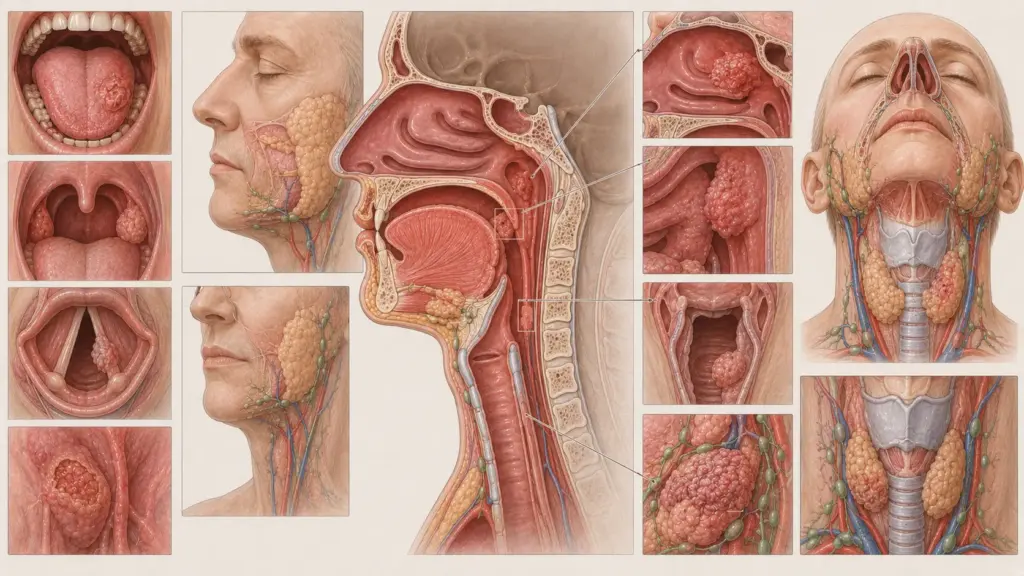
Head and neck cancer is a group of cancers that includes malignant tumors developing in the oral cavity, throat (pharynx), larynx, nasal cavity, sinuses, and salivary glands. According to GLOBOCAN 2022 data, 1,750,871 new cases and 527,226 deaths were reported among adults aged 20 and older worldwide. It is 3 to 4 times more common in men than in women; this difference stems from gender disparities in exposure to tobacco, alcohol, and HPV.
What Is Head and Neck Cancer?
Head and neck cancer refers to malignant neoplasms arising from the mucosal epithelium of the upper digestive and respiratory tracts. The most common histological type is squamous cell carcinoma (90–95%). Based on anatomical subregions, cancers are classified as those of the oral cavity, oropharynx, hypopharynx, nasopharynx, larynx, nasal cavity/sinuses, and salivary glands. The etiology, risk factors, and treatment approaches vary by subregion.
According to data from Frontiers in Oncology 2025, the global burden of head and neck cancer continues to rise. In 2022, the age-standardized incidence rate (ASIR) was 15.3 per 100,000 among men and 4.6 per 100,000 among women. Mortality rates were 7.8 and 2.1, respectively. If current trends continue, 1,600,000 new cases and 820,000 deaths are projected by 2050. The primary causes of this increase are an aging population, tobacco and alcohol use, and changes in the prevalence of HPV infection.
According to Assoc. Prof. Dr. Nilay Şengül, the most critical step in diagnosing head and neck cancers is ensuring that symptoms such as a persistent sore throat, hoarseness, or non-healing mouth sores are not dismissed as “a simple infection.” According to the protocol we follow at Memorial Şişli Hospital, patients with such complaints lasting longer than 3 weeks are always scheduled for an ENT examination and endoscopic evaluation. This approach increases the rate of early-stage diagnosis and improves the chances of local control.
Symptoms of Head and Neck Cancer
Symptoms of head and neck cancer vary depending on the tumor’s anatomical location. In the early stages, symptoms may be mild and easily overlooked by patients. According to NIH/PMC data, the majority of cases are diagnosed at an advanced stage; this is because symptoms are detected too late.
- Ulcers or sores in the mouth or throat that do not heal for more than 3 weeks
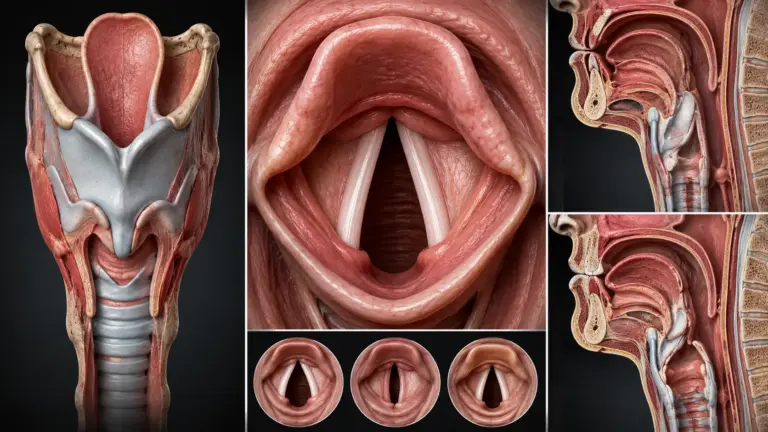
- Persistent hoarseness or voice changes (in laryngeal cancer)
- A hard, enlarging mass of lymph nodes in the neck
- Difficulty swallowing (dysphagia) or pain when swallowing (odynophagia)
- Ear pain (especially in laryngeal and pharyngeal cancers, referred pain)
- Nasal congestion or bloody discharge (in cancers of the nasal cavity or sinuses)
- Weight loss, fatigue, and loss of appetite (advanced stage)
- White (leukoplakia) or red (erythroplakia) patches in the mouth or throat
The Most Notable Symptoms of Head and Neck Cancer
The most notable symptoms of head and neck cancer that require urgent evaluation are as follows: A unilateral, firm, enlarging, and painless lymph node mass in the neck; hoarseness lasting longer than 3 weeks (especially in smokers); weight loss accompanied by difficulty swallowing; and a non-healing ulcer in the mouth. If one or more of these symptoms are present, you must consult an ENT specialist. Assoc. Prof. Dr. Şengül emphasizes that in her clinical practice, these “red flag” symptoms are the most common cause of diagnostic delay.
Causes of Head and Neck Cancer
Various risk factors contribute to the development of head and neck cancer, depending on the histological type and anatomical region. For squamous cell carcinomas, the primary risk factors are smoking, alcohol, and HPV; for salivary gland cancers, radiation and genetic predisposition are more significant.
| Risk Factor | Associated Cancer Site | Relative Risk Increase |
|---|---|---|
| Smoking | Mouth, pharynx, larynx | ~5–25 times |
| Alcohol consumption | Mouth, pharynx, larynx | ~2–5 times |
| Smoking + alcohol combined | Mouth, pharynx, larynx | Synergistic; risk is multiplied |
| HPV-16 infection | Oropharynx (tonsils, base of the tongue) | ~15–20 times |
| Betel nut chewing | Oral cavity | ~5–10 times |
| Marginal malnutrition (vitamin A deficiency) | Oral cavity, pharynx | Variable |
According to NIH/PMC data, 75–85% of squamous cell head and neck cancers are associated with tobacco and alcohol use. HPV-16 accounts for 70% of oropharyngeal cancers, particularly in developed countries, and this rate has been increasing in recent years. HPV-positive oropharyngeal cancers have a better prognosis than HPV-negative ones; this is reflected in a separate staging system in the 8th edition of the AJCC.
Head and Neck Cancer Stages
Head and neck cancer staging is performed according to the AJCC 8th edition TNM system. A separate staging system exists for HPV-positive oropharyngeal cancers because HPV status directly affects prognosis. Tumor size (T), lymph node involvement (N), and distant metastasis (M) are evaluated.
| Stage / Status | Definition | 5-Year Survival (HPV-Negative) | 5-Year Survival (HPV-Positive) |
|---|---|---|---|
| Stage I | Small tumor, no lymph nodes | 70–90% | 90–95% |
| Stage II | Large tumor or multiple lesions, no lymph nodes involved | 50–70% | 80–90 |
| Stage III | Involvement of a single lymph node or an invasive tumor | 40–60% | 70–80 |
| Stage IV | Multiple lymph node involvement or distant metastasis | 30–50 | 50–70 |
According to the 8th edition of the AJCC, staging for HPV-positive oropharyngeal cancers simplifies the T and N criteria because HPV-positive patients generally respond better to treatment. According to data from MDPI Cancers 2025, approximately two-thirds of localized HPV-associated oropharyngeal squamous cell carcinomas develop recurrence; this rate is higher in HPV-negative patients. The recurrence rate in HPV-positive patients is 25–30%.
[VISUAL SUGGESTION: Head and Neck Cancer Staging Scheme — AJCC 8th Edition TNM System and Infographic Showing the Difference Between HPV-Positive and HPV-Negative Patients — Alt text: "Head and Neck Cancer AJCC 8th Edition Staging Scheme — Comparison of HPV Status and Survival"]
Risk Factors for Head and Neck Cancers
Risk factors for head and neck cancers vary by geographic region, lifestyle, and genetic predisposition. According to 2025 data from Frontiers in Oncology, there are significant disparities in the global burden of head and neck cancer.
Gender: Incidence and mortality rates are 3–4 times higher in men than in women. However, an upward trend has been observed in women in recent years; this is attributed to a narrowing of gender differences in tobacco and alcohol use. According to PMC/NIH 2024 data, a marked increase in head and neck cancer incidence has been reported among young women in European countries.
Age: Risk increases with age; the majority of cases are diagnosed in people over 50 years of age. However, HPV-related oropharyngeal cancers can also occur in younger age groups (40–50 years).
Geographic region: South Central Asia has the highest incidence rates; betel nut chewing and tobacco use are widespread in this region. Central America, on the other hand, has the lowest rates. In regions with a high HDI (Human Development Index), thyroid and nasopharyngeal cancers are more common; in regions with a medium HDI, cancers of the lip, oral cavity, and pharynx are more prevalent.
Socioeconomic status: Regions with low and medium HDI generally have higher mortality rates; this is due to inequalities in access to diagnosis and treatment.
Head and Neck Cancer Treatment
Head and neck cancer treatment is personalized based on the tumor stage, anatomical location, HPV status, and the patient’s overall condition. According to NCCN and ESMO guidelines, a multidisciplinary approach is essential in treatment planning. Combinations of surgery, radiation therapy, chemotherapy, and immunotherapy are used.
Surgical Treatment
Surgical resection is the primary treatment for early-stage (Stages I–II) head and neck cancers. The tumor is removed along with an adequate margin of healthy tissue. Neck dissection is performed in patients with clinical or radiological lymph node involvement and in high-risk tumors (≥4 mm depth, perineural invasion, lymphovascular invasion). Function-preserving surgery (e.g., partial laryngectomy) aims to preserve voice and swallowing functions.
Radiotherapy
Radiotherapy is used as an alternative to surgery in early-stage disease or as adjuvant therapy in advanced stages. Intensity-modulated radiotherapy (IMRT) provides high-dose tumor control while sparing normal tissues. Brachytherapy may be used in selected early-stage oral cavity and oropharyngeal cancers. Concurrent chemoradiotherapy with cisplatin is the standard treatment for advanced (Stage III–IV) localized disease.
Chemotherapy
Platinum-based chemotherapy (cisplatin, carboplatin) is used as neoadjuvant, adjuvant, or palliative therapy. The EXTREME regimen (cetuximab + cisplatin/5-FU) was the standard of care for advanced recurrent/metastatic disease; however, immunotherapy trials have replaced this regimen.
Immunotherapy
Immune checkpoint inhibitors have become the standard of care for recurrent/metastatic head and neck squamous cell carcinoma (R/M HNSCC). According to MDPI Cancers 2025 data:
- KEYNOTE-048: Pembrolizumab monotherapy improved overall survival compared to the EXTREME regimen in patients with PD-L1 CPS ≥1 (12.3 months vs. 10.3 months; p=0.009). The combination of pembrolizumab and chemotherapy provided superior survival in all patients (13.0 months vs. 10.7 months; p=0.003).
- CheckMate 141: Nivolumab improved overall survival compared to standard chemotherapy in platinum-refractory patients.
- HPV status: The immunotherapy response rate was 18.8% in HPV-positive patients and 12.2% in HPV-negative patients. However, no statistically significant difference was observed. The highest response rates (23%) were observed in patients with PD-L1 CPS ≥20.
Research on neoadjuvant immunotherapy is ongoing. In the CheckMate-358 trial, neoadjuvant nivolumab achieved a 23.5% pathological response rate in HPV-positive tumors. The KEYCHAIN trial is evaluating the combination of pembrolizumab and radiation therapy in patients with HPV-positive localized advanced-stage disease.
Head and Neck Cancer Metastasis
Head and neck cancer spreads primarily through the lymphatic system. Cervical lymph nodes are the most common site of metastasis. Lymph node involvement directly affects prognosis; bilateral or contralateral lymph node involvement indicates a poorer prognosis. Distant metastases are seen in the lungs, bones, and liver; however, distant metastases in head and neck cancers are less common than in other types of cancer.
In HPV-positive oropharyngeal cancers, lymph node involvement may occur earlier and be more widespread; however, this is offset by a better treatment response in HPV-positive patients. According to MDPI Cancers 2025 data, approximately two-thirds of localized HPV-associated oropharyngeal cancers develop recurrence; this rate is higher in HPV-negative patients.
Clinical Assessment by Assoc. Prof. Dr. Nilay Şengül
In my clinical practice, I frequently observe the following: The vast majority of patients diagnosed with head and neck cancer are initially evaluated for 2–3 months prior to diagnosis as having a “throat infection,” “hoarseness,” or “dental problem,” and this delay leads to disease progression. With the multidisciplinary protocol we implement at Memorial Şişli Hospital, we aim to shorten this timeframe.
According to Assoc. Prof. Dr. Nilay Şengül, the most significant paradigm shift in head and neck cancer is the transition from a “one-size-fits-all” treatment approach to “personalized treatment based on HPV status and molecular profiling.” In particular, the KEYNOTE-048 study has demonstrated that pembrolizumab has changed the standard of care for recurrent/metastatic disease.
The better response to immunotherapy in HPV-positive patients is driving the development of new strategies for treating this subgroup. Assoc. Prof. Dr. Şengül also emphasizes that combinations of function-preserving surgery and radiation therapy in early-stage disease ensure cancer control while preserving patients’ quality of life.
From Diagnosis to Recovery: How Does the Process Proceed?
- Initial Examination and Evaluation: The patient’s symptoms (duration of hoarseness, difficulty swallowing, neck mass, weight loss), lifestyle (smoking, alcohol, HPV risk factors), and family history are assessed. During the physical examination, the mouth, pharynx, larynx, neck lymph nodes, and cranial nerves are evaluated. Assoc. Prof. Dr. Şengül emphasizes that in her clinical practice, she schedules an endoscopic evaluation without delay for patients with persistent symptoms lasting longer than 3 weeks.
- Diagnostic Tests:
- Endoscopy (nasopharyngolaryngoscopy): Assesses the tumor’s location, size, and extent; a biopsy is taken
- Imaging (CT/MRI): To assess tumor depth, bone invasion, lymph node involvement, and to screen for distant metastases
- PET-CT: More sensitive than CT for lymph node staging; particularly in patients scheduled for neck dissection
- HPV testing: p16 immunohistochemistry or HPV DNA testing in oropharyngeal cancers; determines staging and prognosis
- Panoramic X-ray: To assess bone invasion in oral cavity and mandibular cancers
- Staging and Treatment Planning: The AJCC 8th edition TNM staging system is applied. A separate staging system is used for HPV-positive oropharyngeal cancers. An individualized treatment plan is developed during a multidisciplinary tumor board meeting (ENT, medical oncology, radiation oncology, plastic surgery, radiology, pathology). According to Assoc. Prof. Dr. Şengül, the decisions made in this council optimize both oncological and functional outcomes.
- Treatment Approach:
- Early stage (Stages I–II): Surgery or radiation therapy (single modality)
- Localized advanced stage (Stages III–IVA): Surgery + adjuvant radiation therapy/chemoradiation or definitive chemoradiation
- Recurrent/metastatic: Pembrolizumab monotherapy (PD-L1 CPS ≥1) or pembrolizumab + chemotherapy (all cases)
- Hospital Stay and Discharge: The hospital stay following surgery ranges from 3 to 14 days, depending on the extent of the procedure. For major surgeries such as laryngectomy, a hospital stay of 10–14 days is expected; for smaller procedures such as tonsillectomy, a stay of 3–5 days is expected. After discharge, instructions are provided for wound care, tracheostomy care (if applicable), and nutrition. Supportive treatments are planned for dry mouth and difficulty swallowing following radiation therapy.
- Follow-up and Monitoring: Follow-up visits are scheduled every 1–3 months for the first 2 years, every 3–6 months for the next 3 years, and annually starting in the 5th year. Each visit includes a physical examination, neck palpation, and endoscopic evaluation. Imaging with CT or MRI is recommended during the first year. Screening for secondary malignancies (particularly in the lungs and upper gastrointestinal tract) continues for life. Assoc. Prof. Dr. Şengül emphasizes that, in her clinical practice, it is critical for patients’ quality of life that they receive psychosocial support during the follow-up process.
Frequently Asked Questions
What is head and neck cancer?
Head and neck cancer is a group of cancers that includes malignant tumors developing in the oral cavity, throat (pharynx), larynx, nasal cavity, sinuses, and salivary glands. The most common type is squamous cell carcinoma (90–95%). According to GLOBOCAN 2022 data, 1,750,871 new cases and 527,226 deaths were reported worldwide among adults aged 20 and older. It is 3–4 times more common in men than in women.
What are the symptoms of head and neck cancer?
The most common symptoms include mouth or throat sores that do not heal for more than 3 weeks, persistent hoarseness, a hard, growing mass of lymph nodes in the neck, difficulty swallowing, ear pain (referred pain), nasal congestion or bloody discharge, weight loss, and fatigue. Symptoms may be mild in the early stages; therefore, if symptoms persist for more than 3 weeks, you should definitely consult an ENT specialist.
What causes head and neck cancer?
The main causes are smoking, alcohol consumption, and human papillomavirus (HPV-16) infection. The risk increases synergistically when smoking and alcohol are used together. HPV-16 is responsible for 70% of oropharyngeal cancers, particularly in developed countries. Betel nut chewing (Southeast Asia), poor nutrition (vitamin A deficiency), and radiation exposure are also risk factors.
Is head and neck cancer treatable?
Yes, it is treatable in the early stages. In Stage I–II patients, the 5-year survival rate is between 70% and 90% with surgery or radiation therapy. In advanced stages (Stages III–IV), survival rates can reach 40–60% with multimodal therapy (surgery + radiation therapy + chemotherapy). In recurrent/metastatic disease, overall survival has been significantly prolonged with immunotherapy (pembrolizumab, nivolumab). HPV-positive patients generally have a better prognosis than HPV-negative patients.
How is head and neck cancer surgery performed?
The surgical technique is determined based on the tumor’s anatomical location. Procedures such as laryngectomy (removal of the larynx), pharyngectomy (removal of the pharynx), mandibulectomy (removal of the mandible), and neck dissection (removal of lymph nodes) may be performed. Function-preserving surgery (partial laryngectomy, transoral microsurgery) aims to preserve voice and swallowing functions. Free tissue grafts or local flaps may be used for reconstruction.
How is speech affected after head and neck cancer surgery?
Natural speech is lost after a total laryngectomy; however, alternative methods of speech are available. Speech can be regained through an electrolarynx device, esophageal speech, or a tracheoesophageal prosthesis (TEP). Voice quality may change after a partial laryngectomy; however, speech function is generally preserved. Speech therapy is an important part of postoperative rehabilitation. Assoc. Prof. Dr. Şengül emphasizes that, in her clinical practice, a preoperative consultation with a speech therapist enhances the patient’s psychological preparation and postoperative adaptation.
What can you eat after head and neck cancer surgery?
Postoperative nutrition varies depending on the extent of the procedure. After a total laryngectomy, temporary feeding via a nasogastric tube or gastrostomy may be required. As swallowing function returns, the patient begins with soft, pureed foods. Nutrition may become challenging after radiation therapy due to dry mouth and changes in taste; in such cases, high-calorie, soft foods and fluid supplements are recommended. Follow-up with a dietitian is critical for quality of life.
What is the recovery process like after head and neck cancer surgery?
The recovery process varies depending on the extent of the surgery and the presence of additional treatments (radiation therapy, chemotherapy). Surgical wound healing takes 2–4 weeks. Dry mouth and difficulty swallowing following radiation therapy may persist for 3–6 months; in some patients, these symptoms may be permanent. Functional rehabilitation (speech, swallowing, shoulder movements) may take 6–12 months. Assoc. Prof. Dr. Şengül emphasizes that in her clinical practice, early rehabilitation (beginning in the second week after surgery) significantly improves functional outcomes.
Which department treats head and neck cancer?
A multidisciplinary approach is used in the diagnosis and treatment of head and neck cancer. The physician who makes the diagnosis and performs the initial evaluation is typically an ear, nose, and throat (ENT) specialist. Treatment planning involves teams from medical oncology, radiation oncology, ENT, plastic surgery, and speech-language pathology. According to NCCN and ESMO guidelines, all head and neck cancer patients should be evaluated at an experienced center.
When does radiation therapy begin after head and neck cancer surgery?
Adjuvant radiation therapy typically begins after the surgical wound has fully healed, which is 4–6 weeks later. In patients scheduled for concurrent chemoradiotherapy, radiation therapy should begin within 6 weeks. Delay may increase the risk of local recurrence. The radiation therapy dose and fractionation are determined based on the surgical margins, lymph node involvement, and additional risk factors. Assoc. Prof. Dr. Şengül emphasizes that, in clinical practice, it is critical that the interval between surgery and radiation therapy not exceed 6 weeks.
How are neck movements affected after head and neck cancer surgery?
Shoulder movements may be affected following neck dissection; in particular, shoulder drooping and loss of strength may develop in cases of spinal accessory nerve (XIth cranial nerve) injury. Physical therapy and shoulder rehabilitation should begin as early as the second week after surgery. Early mobilization prevents shoulder stiffness and lymphedema. Assoc. Prof. Dr. Şengül emphasizes that, in her clinical practice, adherence to physical therapy following neck dissection directly impacts long-term functional outcomes.
Head and neck cancer is a group of malignancies that constitutes a significant cancer burden worldwide and is often diagnosed at an advanced stage. According to GLOBOCAN 2022 data, with 1,750,871 new cases and 527,226 deaths, it ranks among the most common cancers in men. Smoking, alcohol, and HPV are the primary risk factors. High survival rates can be achieved with surgery or radiation therapy in the early stages.
In advanced stages, multimodal therapy (surgery + radiation therapy + chemotherapy) is administered. Immunotherapy (pembrolizumab, nivolumab) has become the standard of care for recurrent or metastatic disease and has significantly prolonged survival. The better prognosis and response to immunotherapy observed in HPV-positive patients are driving the development of personalized treatment strategies.
To discuss your personal situation regarding head and neck cancer and have your questions answered, you can consult with Assoc. Prof. Dr. Nilay Şengül. To schedule an appointment at her clinic at Memorial Şişli Hospital, please call 444 7 888.
Sources
- IARC GLOBOCAN 2022, Global Cancer Statistics — https://pmc.ncbi.nlm.nih.gov/articles/PMC11706580/
- Frontiers in Oncology, “Global burden of head and neck cancer: GLOBOCAN 2022 and future projections” — https://www.frontiersin.org/journals/oncology/articles/10.3389/fonc.2025.1583400/full
- SciOpen, "Global Burden of Head and Neck Cancer: GLOBOCAN 2022 and Future Projections" — https://www.sciopen.com/article/10.1007/s10388-025-00977-0
- NIH/PMC, “Head and Neck Cancer: Etiology, Diagnosis, Prevention, and Treatment” — https://pmc.ncbi.nlm.nih.gov/articles/PMC11096987/
- MDPI Cancers, “Immunotherapy in Recurrent/Metastatic Head and Neck Squamous Cell Carcinoma” — https://www.mdpi.com/2072-6694/17/5/825
- NIH/PMC, “Head and Neck Cancer: Epidemiology, Risk Factors, and Prevention” — https://pmc.ncbi.nlm.nih.gov/articles/PMC10453296/
- NEJM, “Pembrolizumab plus Chemotherapy in Recurrent or Metastatic Head and Neck Squamous Cell Carcinoma (KEYNOTE-048)” — https://www.nejm.org/doi/full/10.1056/NEJMoa1910735
- NIH/PMC, “Immunotherapy for Head and Neck Squamous Cell Carcinoma” — https://pmc.ncbi.nlm.nih.gov/articles/PMC11236331/