At a Glance
- According to the NCI-MATCH study, a matchable targeted drug can be found in 40% of patients who have tumour genetic testing.
- Patients treated on the recommendation of a molecular tumour board (MTB) have a 54% lower risk of death.
- NGS technology analyses more than 500 genes in a single test to determine targeted therapy and immunotherapy options.
- The FDA has approved targeted therapies for NTRK fusion and MSI-H/dMMR status regardless of tumour type.
In cancer treatment, the phrase “every patient is different” is no longer a metaphor it is a scientific reality. Personalised cancer treatment through genetic profiling aims to determine the most effective treatment strategy specific to that patient by analysing the unique genetic make-up of each tumour. So how does this process work, which patients is it suitable for, and how much benefit does it provide?
What Is Genetic Profiling and Personalised Treatment?
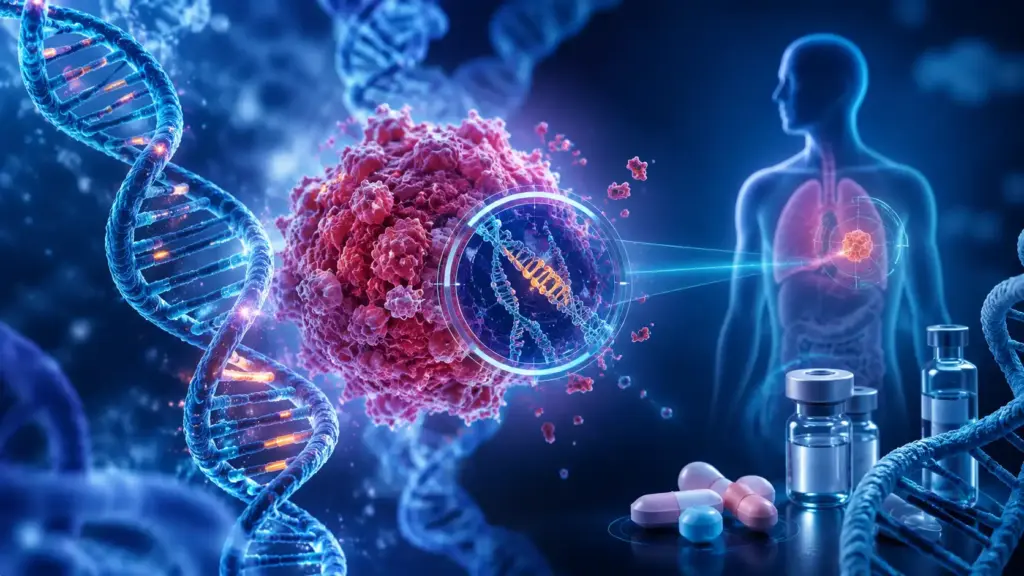
Personalised cancer treatment through genetic profiling is an approach that analyses genetic mutations, copy number variations, and structural rearrangements in a patient’s tumour tissue, and identifies targeted drugs or immunotherapy options specific to these genetic characteristics. According to NCI data, this method identifies “driver mutations” that trigger tumour growth and recommends drugs targeting these mutations.
Personalised medicine (precision medicine) brings together data such as the patient’s genetic profile, environmental factors, behaviours, and medication history to make treatment patient-specific. NGS (Next-Generation Sequencing) technology, which simultaneously analyses hundreds of genes in a single test, has become the cornerstone of this process.
Why Is This Approach Important?
Conventional cancer treatment is based on classifying the tumour according to the organ (lung, breast, colon, etc.). However, two different tumours in the same organ can be completely different genetically. According to data from the NCI-MATCH study, in the tumour genetic test results of more than 6,000 patients, a matchable targeted drug was found in 40% of patients. This rate was achieved with a limited number of targeted drugs; as new drugs are developed, the rate is expected to increase.
According to a systematic review and meta-analysis published in Nature in 2025, patients treated on the recommendation of a molecular tumour board (MTB) have a 54% lower hazard ratio for death compared with those receiving standard treatment (pooled HR: 0.46; 95% CI: 0.280.76). In addition, progression-free survival (PFS) was significantly improved in patients treated on MTB recommendation (pooled HR: 0.65; 95% CI: 0.520.80).
According to Assoc. Prof. Dr Nilay Şengül, genetic profiling is no longer a luxury but a standard necessity: “In clinical practice, I request an NGS panel in every patient diagnosed with advanced-stage lung cancer, colon cancer, or breast cancer. Once I saw how rapid and pronounced the treatment response was when I started osimertinib in a patient who had been receiving standard chemotherapy up to that point and was found to have a positive EGFR mutation. This is a concrete example of how inadequate the ‘give everyone the same drug’ approach is.”
How Does the NGS and Genetic Profiling Process Work?
NGS technology analyses DNA obtained from tumour tissue or blood sample (liquid biopsy). According to a review published in PMC, the process involves the following steps:
- Sample collection: Tumour biopsy or blood sample (liquid biopsy) is obtained. Liquid biopsy analyses circulating tumour DNA (ctDNA) and is a non-invasive alternative.
- DNA/RNA extraction: Genetic material is isolated in the laboratory.
- Library preparation and sequencing: The genetic material is made computer-readable and sequenced.
- Bioinformatic analysis: The data obtained are compared with known cancer genes; mutations, fusions, and copy number variations are detected.
- Reporting: Actionable findings are presented in an understandable report for the clinician.
According to NCCN (National Comprehensive Cancer Network) guidelines, NGS is recommended particularly for common tumour types such as non-small cell lung cancer (NSCLC), breast cancer, colon cancer, ovarian cancer, and pancreatic cancer. Comprehensive NGS panels can analyse more than 500 genes and also detect complex biomarkers such as TMB (tumour mutation burden), MSI (microsatellite instability), and NTRK fusions.
Which Genetic Changes Guide Treatment?
| Genetic Change | Associated Cancers | Targeted Therapy |
|---|---|---|
| EGFR mutation | NSCLC | Osimertinib, erlotinib, gefitinib |
| ALK fusion | NSCLC | Alectinib, brigatinib, lorlatinib |
| BRCA1/BRCA2 mutation | Breast, ovarian, prostate | Olaparib, talazoparib (PARP inhibitors) |
| BRAF V600E mutation | Melanoma, colon | Vemurafenib, dabrafenib + trametinib |
| MSI-H / dMMR | Colon, gastric, endometrium (tumour type-independent) | Pembrolizumab, dostarlimab |
| NTRK fusion | Sarcoma, thyroid, lung (tumour type-independent) | Larotrectinib, entrectinib |
| HER2 amplification | Breast, gastric | Trastuzumab, pertuzumab, T-DXd |
Assoc. Prof. Dr Şengül emphasises the importance of tumour type-independent approvals in clinical practice: “One of my patients had a rare sarcoma type and there were no remaining standard treatment options. NGS analysis detected an NTRK fusion and we started larotrectinib. This is a case that shows how critical the question ‘what is the genetic make-up of the tumour’ is rather than ‘where did the tumour start’. Tumour type-independent treatments are opening doors of hope in rare cancers.”
Molecular Tumour Board and Decision-Making Process
Interpretation of genetic profiling results and treatment decisions are generally made by a molecular tumour board (MTB). This board consists of specialists such as medical oncologist, pathologist, molecular biologist, and genetic counsellor. According to the meta-analysis published in Nature, the median overall survival of patients treated on MTB recommendation is 13.5 months, and median progression-free survival is 4.5 months.
According to a breast cancer study published in MDPI Cancers in 2025, 45.7% of patients receiving targeted treatment on MTB recommendation achieved clinical benefit (6 months progression-free survival or partial/complete response). A high LOH (loss of heterozygosity) score was significantly associated with clinical benefit (p=0.009).
According to Assoc. Prof. Dr Nilay Şengül, the MTB process is not just a test but a multidisciplinary approach: “At Memorial Şişli, we hold regular molecular tumour board meetings every week. In complex cases, we bring together NGS results, the clinical situation, and the patient history to determine the most appropriate treatment strategy. This process does not mean ‘doing what the test result says’; it means making decisions with ‘test result, clinical data, and patient preference considered together’.”
Common Misconceptions and Points to Consider
- “Genetic testing benefits everyone”: Incorrect. According to NCI-MATCH data, an actionable mutation is found in approximately 40% of patients; in the remaining 60%, a targeted drug may not yet be available. This is not a “failure” of the test but an indication that scientific development is ongoing.
- “Genetic testing is expensive and inaccessible”: Partly true, partly false. NGS costs have fallen significantly in recent years. In many countries, health insurers cover comprehensive genetic tests.
- “Targeted therapy has no side effects”: Incorrect. Targeted therapies are generally better tolerated than chemotherapy but can have serious side effects. For example, skin rash and diarrhoea due to EGFR inhibitors, and elevated liver enzymes due to ALK inhibitors are common.
- “One test is sufficient”: Incorrect. Cancer can acquire new mutations over time (clonal evolution). When treatment resistance develops, re-biopsy and NGS analysis may be required.
Personalised cancer treatment through genetic profiling has become an indispensable part of standard care in oncology. NGS technology, molecular tumour board assessment, and targeted drugs offer patients more effective and less toxic options than standard chemotherapy. However, the success of this approach begins with performing the right test at the right time in the right patient.
You can consult Assoc. Prof. Dr Nilay Şengül to evaluate your personal situation regarding personalised cancer treatment through genetic profiling and to have your questions answered. To book an appointment at Memorial Şişli Hospital, you can call 444 7 888.
References
- NCI, “NCI-MATCH Trial” https://www.cancer.gov/…
- Nature npj Precision Oncology, “Systematic review and meta-analysis of molecular tumor board data” (2025) https://www.nature.com/…
- PMC, “Next-generation sequencing in cancer diagnosis and treatment” https://pmc.ncbi.nlm.nih.gov/articles/PMC12009796/
- MDPI Cancers, “Precision Oncology Guided by Genomic Profiling in Breast Cancer” (2025) https://www.mdpi.com/…